
Wednesday, March 02, 2005


In the Woods
In the woods of his youth
In the dream, there are things that chase but never catch
In the doghouse
In the madhouse
In the woods where giants dwell and wolves lurk,
and little girls should not stray alone
even in cloaks of red
In the dreamland
In the nightmare
Under the moon of hunt and harvest
of faery fires lighting oak limbs and glens and lochs of crystal
There the skellyman dances and Little Red prances
and Big Bad smiles, licks chops
and glances over his shoulder, wondering where the hunter is
on this night under the moon in the woods
of the dreamland
of his youth
by the madhouse
in the nightmare
and harvest faery fires
In the dream, there are things that chase but never catch
In the doghouse
In the madhouse
In the woods where giants dwell and wolves lurk,
and little girls should not stray alone
even in cloaks of red
In the dreamland
In the nightmare
Under the moon of hunt and harvest
of faery fires lighting oak limbs and glens and lochs of crystal
There the skellyman dances and Little Red prances
and Big Bad smiles, licks chops
and glances over his shoulder, wondering where the hunter is
on this night under the moon in the woods
of the dreamland
of his youth
by the madhouse
in the nightmare
and harvest faery fires
Monday, February 28, 2005
Crux
‘Twas the crux of it for him, the Charlatan:
Valium to make the atrocities go down easier.
An infection scavenger employing subtle elegance in his ornate theatre of pain,
mixing nouveau alchemy over jewel-crusted Gypsy skulls,
opulent and grinning.
A devil aura in the void, he was, a monster without qualm or flair.
He died on the Sabbath, en utero, and soul flies gathered,
buzzing, ethereal
like mysterious ash, ambient,
all about, suffocating, permeating,
and within the veins and ventricles.
But she...
She was his unquiet obsession, an artwork, a brushstroke existence
forming a diabolic trinity with the Charlatan and me.
Released by a talisman fossil carried on the carapace of a dungeon moth
— Mephisto’s timeless incarnation, a butterfly built with a skeleton key —
she led her unresurrected messiah into jagged heaven,
spitting vitriol and splitting his sensual shroud.
Industrial heavenly voices merged in the crimson shadows of the machine garden,
and Beauty’s ghost dawned, fantastical, with one cry,
with shoebox memories to snapping, shrieking to pierce the lull…
Sebastian…
I recall the vignette: Voltaire menacing Audra;
a recollected affection conjuring bittersweet musings
to the strain of minor chords — eerie, luminous and
enigmatic.
Immersed in swirling poetry, their discord was mesmerizing, frenzied.
Romantic.
And in lush quiet descending, their unstructured improvisation was lost
in a bizarre tragedy, a starkly pathetic horror
born of melancholic passions.
Icons reduced to cryptic fragments, synthetic and creeping
through the lyrical whisper of serenity-gone.
An atmosphere of intrigue descends, dominates, and,
chameleon-like, I relinquish the memory and
dissolve into the cemetery backdrop.
Here, a silken dream glimmers like a beautiful child of love,
poised and yearning.
Smokey danger questions.
Truth simmers in the sparking fragility of new awareness.
Ennui permeates the surrealistic spirit, evoking
a serene sanctuary like a fanciful womb.
It offers a sacrament to the faery realm, yet hidden,
promising transformative release — the visionary myth,
the liquid image charged with ancient delight.
Paralyzed in a unity of times, naked and weightless,
worthless,
static lyrics charged with a dark edge testify
to their ascension, unexpected —
To the mood, veiled and visceral —
To the hushed isolation, surrendered —
To the hypnotic allusion, recalled and claustrophobic —
To the grave, shared in frustrated harmony..
Valium to make the atrocities go down easier.
An infection scavenger employing subtle elegance in his ornate theatre of pain,
mixing nouveau alchemy over jewel-crusted Gypsy skulls,
opulent and grinning.
A devil aura in the void, he was, a monster without qualm or flair.
He died on the Sabbath, en utero, and soul flies gathered,
buzzing, ethereal
like mysterious ash, ambient,
all about, suffocating, permeating,
and within the veins and ventricles.
But she...
She was his unquiet obsession, an artwork, a brushstroke existence
forming a diabolic trinity with the Charlatan and me.
Released by a talisman fossil carried on the carapace of a dungeon moth
— Mephisto’s timeless incarnation, a butterfly built with a skeleton key —
she led her unresurrected messiah into jagged heaven,
spitting vitriol and splitting his sensual shroud.
Industrial heavenly voices merged in the crimson shadows of the machine garden,
and Beauty’s ghost dawned, fantastical, with one cry,
with shoebox memories to snapping, shrieking to pierce the lull…
Sebastian…
I recall the vignette: Voltaire menacing Audra;
a recollected affection conjuring bittersweet musings
to the strain of minor chords — eerie, luminous and
enigmatic.
Immersed in swirling poetry, their discord was mesmerizing, frenzied.
Romantic.
And in lush quiet descending, their unstructured improvisation was lost
in a bizarre tragedy, a starkly pathetic horror
born of melancholic passions.
Icons reduced to cryptic fragments, synthetic and creeping
through the lyrical whisper of serenity-gone.
An atmosphere of intrigue descends, dominates, and,
chameleon-like, I relinquish the memory and
dissolve into the cemetery backdrop.
Here, a silken dream glimmers like a beautiful child of love,
poised and yearning.
Smokey danger questions.
Truth simmers in the sparking fragility of new awareness.
Ennui permeates the surrealistic spirit, evoking
a serene sanctuary like a fanciful womb.
It offers a sacrament to the faery realm, yet hidden,
promising transformative release — the visionary myth,
the liquid image charged with ancient delight.
Paralyzed in a unity of times, naked and weightless,
worthless,
static lyrics charged with a dark edge testify
to their ascension, unexpected —
To the mood, veiled and visceral —
To the hushed isolation, surrendered —
To the hypnotic allusion, recalled and claustrophobic —
To the grave, shared in frustrated harmony..
Friday, February 11, 2005
"Reclamation"
From a garden of waste ...
... a new world growing
Used to be a garden here, or so he imagines, walking through.
There are houses nearby, standing just beyond a wooden privacy fence, and he imagines that in the decades before the motorcars crawled here to die, people who lived in those houses had planted seeds and raised foodstuffs from the sandy soil of a field where this lot now sprawls.
There, where stacks of trashed Toyotas tower, once tomatoes grew. Ghosts of butterbeans linger under the broken-down Buicks and busted Beetles. Over time, collards by the bunch became corroded Corollas and Corvettes, still heavy with iron.
Where field peas waved, now Fords decompose, a compost heap of post-human waste, of heavy metal and dry-rotted rubber, of vinyl baked by the sun and cracked like a dried lake bottom.
Once, someone moved through green growth and spread Sevin dust from the balled-up end of an old sock, hoping to choke the chiggers and the worm that gnaws. Now the very elements erode. Steel becomes, through the magic of oxygen and entropy, dust.
Rust coats the earth, discolors the sand, swirls in oily eddies of mud and viscous motor fluids where once was upturned loam, hand-pulled weeds, and rows of wooden stakes with empty seed packets attached to mark the seedlings.
He imagines the rust farmer marking his metallic rows with stakes fashioned from gearshifts and signs made of the pristine covers ripped from untouched maintenance booklets taken out of looted glove compartments. Here are planted the Oldsmobiles, the markers would tell him, and this row has smashed Cadillacs sinking into the soft earth.
But this is no simple graveyard. It’s a way station.
People come to pick through the leavings — here a door, a mirror, a bumper, a quarter panel. Larger parts are left for scrap, and the earth inevitably reclaims its own.
Weeds sprout from fenders and root in rotted bucket seats. Saplings push up through gutted engine blocks, seeking sunlight.
He imagines, as he walks through, the trees that will stand here some day being removed, the earth again upturned, and green gardens planted beside the new houses built.
There, where Datsuns now disentegrate — tomatoes and butterbeans, collards and peas.
It’s a dream he has.
Peace.
***
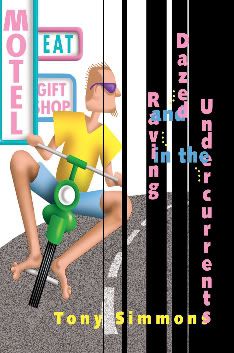
(Written for this Sunday's "Undercurrents" column for The News Herald.)
... a new world growing
Used to be a garden here, or so he imagines, walking through.
There are houses nearby, standing just beyond a wooden privacy fence, and he imagines that in the decades before the motorcars crawled here to die, people who lived in those houses had planted seeds and raised foodstuffs from the sandy soil of a field where this lot now sprawls.
There, where stacks of trashed Toyotas tower, once tomatoes grew. Ghosts of butterbeans linger under the broken-down Buicks and busted Beetles. Over time, collards by the bunch became corroded Corollas and Corvettes, still heavy with iron.
Where field peas waved, now Fords decompose, a compost heap of post-human waste, of heavy metal and dry-rotted rubber, of vinyl baked by the sun and cracked like a dried lake bottom.
Once, someone moved through green growth and spread Sevin dust from the balled-up end of an old sock, hoping to choke the chiggers and the worm that gnaws. Now the very elements erode. Steel becomes, through the magic of oxygen and entropy, dust.
Rust coats the earth, discolors the sand, swirls in oily eddies of mud and viscous motor fluids where once was upturned loam, hand-pulled weeds, and rows of wooden stakes with empty seed packets attached to mark the seedlings.
He imagines the rust farmer marking his metallic rows with stakes fashioned from gearshifts and signs made of the pristine covers ripped from untouched maintenance booklets taken out of looted glove compartments. Here are planted the Oldsmobiles, the markers would tell him, and this row has smashed Cadillacs sinking into the soft earth.
But this is no simple graveyard. It’s a way station.
People come to pick through the leavings — here a door, a mirror, a bumper, a quarter panel. Larger parts are left for scrap, and the earth inevitably reclaims its own.
Weeds sprout from fenders and root in rotted bucket seats. Saplings push up through gutted engine blocks, seeking sunlight.
He imagines, as he walks through, the trees that will stand here some day being removed, the earth again upturned, and green gardens planted beside the new houses built.
There, where Datsuns now disentegrate — tomatoes and butterbeans, collards and peas.
It’s a dream he has.
Peace.
***
(Written for this Sunday's "Undercurrents" column for The News Herald.)
Monday, February 07, 2005
"She"
(From the Arturo Fuente Short Story Collection)
***
She wore a red dress from Paris, hand tailored for her by a little Belgian girl whose Swiss wristwatch kept perfect time.
She drove an Italian automobile with Corinthian leather seats and an engine built by a German man whose Jewish family had hidden in Fascist Italy during the second World War.
She smoked silk-cut tobacco from the Dominican Republic, rolled on papers crafted in Mexico. Her Japanese lighter was filled with butane that had originated in the deserts of the Middle East.
She ate Chinese delicacies with chopsticks and never dropped a grain of yellow rice. She enjoyed Russian caviar on Danish crackers. She sipped purified Amazonian water from a bottle hand-blown in Brazil.
Over her bed hung a Native American dreamcatcher, and it worked. She had only good dreams of happy times, prosperity, pale boys, fine French wines, and dancing to Austrian polkas.
Her right thigh bore the scar left by an allergic reaction she had suffered from a sting by a Portuguese Man-o-War. The scar was shaped like Africa.
She had a Swede’s blonde hair, and green Irish eyes rimmed by Egyptian kohl. She had warm Moroccan skin, and pouting Persian lips, the long and graceful legs of a Russian prima ballerina, and the nimble fingers of a Czechoslovakian pianist.
Sometimes, she looked at me like I wasn’t there.
And sometimes, she looked at me like I was all the world and the sky in which it lolled, like every language issued from the roots of my tongue, and the universe beyond was in my eyes, and I was one of her good and righteous dreams.
She was my American girl.
***
***
She wore a red dress from Paris, hand tailored for her by a little Belgian girl whose Swiss wristwatch kept perfect time.
She drove an Italian automobile with Corinthian leather seats and an engine built by a German man whose Jewish family had hidden in Fascist Italy during the second World War.
She smoked silk-cut tobacco from the Dominican Republic, rolled on papers crafted in Mexico. Her Japanese lighter was filled with butane that had originated in the deserts of the Middle East.
She ate Chinese delicacies with chopsticks and never dropped a grain of yellow rice. She enjoyed Russian caviar on Danish crackers. She sipped purified Amazonian water from a bottle hand-blown in Brazil.
Over her bed hung a Native American dreamcatcher, and it worked. She had only good dreams of happy times, prosperity, pale boys, fine French wines, and dancing to Austrian polkas.
Her right thigh bore the scar left by an allergic reaction she had suffered from a sting by a Portuguese Man-o-War. The scar was shaped like Africa.
She had a Swede’s blonde hair, and green Irish eyes rimmed by Egyptian kohl. She had warm Moroccan skin, and pouting Persian lips, the long and graceful legs of a Russian prima ballerina, and the nimble fingers of a Czechoslovakian pianist.
Sometimes, she looked at me like I wasn’t there.
And sometimes, she looked at me like I was all the world and the sky in which it lolled, like every language issued from the roots of my tongue, and the universe beyond was in my eyes, and I was one of her good and righteous dreams.
She was my American girl.
***
Thursday, January 27, 2005
A real "real" signing -- and surprises galore...
More notes from a certain leather journal...
The sun goes and cold settles -- the coffee machines hiss and sputter. Voices. Rustling.
I spoke to a group at the library on Thursday (a woman at a nearby table just said "Thursday" at the moment I wrote the word -- how weird is that? -- and now I'm eavesdropping on her conversation; she's talking about a work schedule). Anyway. I'm talking to the group at the library -- and my dad is there, and my Uncle Eddie and Aunt Joan -- a total surprise. They drove in from Century/Pensacola without a warning and found the downtown library on their own and surprised me. It was a wonderful moment and helped make a special night that much better.
The talk went well. People bought books, gave hugs, laughed at all the right places, applauded at all the right places. They asked good questions. One man who said he "left Century 35 years ago" and had never gone back bought a book -- Uncle Eddie had coached him in football. They sat on the back row and told stories. Eddie told him about me throwing pebbles at monkeys at the old zoo in Cantonment or Pensacola or somewhere (I think that's where it was). I don't recall doing that, but I've heard the stories.
We went from there to Po Folks for supper, then to the house for a short tour, then they drove home. I was (and am still) pretty jazzed about the whole thing. George Vickery, the library director, gave a gracious intro, and Norma Hubbard, the president of Friends of the Library, decorated the refreshments table with camelias. Grandma Simmons would have approved. Visitors included Susan Tull, Nicole Barefield, Pat Nease, Marilyn Smith, Adele Head, Jack Saunders -- some names that have shown up in my journal before, having signed the thing at the Pottersville anthology debut. Other well-wishers sent emails.
It was a happy time and went well. I was glad of it and proud. And I was especially proud that Debra and Jessi were there to share it with me. Debra took money while I signed and schmoozed. Jessi checked out a book then came back for the talk. (Nathan was at a play practice and made it back just in time for the big finish; he'd have been there if he could've been.)
But I was especially proud that Dad and Eddie and Joan were there. Words fail. What really can I say? To have them go so far, come so far, just to be there, to be here, for my official debut, my coming out party, my premiere -- to support me, to love me, to give out good money to buy my book -- to be proud of me and happy for me.
Something special indeed.
Thursday, I was a blessed man.
Peace.
(Originally written @ Books-a-Million, 1-24-05)
The sun goes and cold settles -- the coffee machines hiss and sputter. Voices. Rustling.
I spoke to a group at the library on Thursday (a woman at a nearby table just said "Thursday" at the moment I wrote the word -- how weird is that? -- and now I'm eavesdropping on her conversation; she's talking about a work schedule). Anyway. I'm talking to the group at the library -- and my dad is there, and my Uncle Eddie and Aunt Joan -- a total surprise. They drove in from Century/Pensacola without a warning and found the downtown library on their own and surprised me. It was a wonderful moment and helped make a special night that much better.
The talk went well. People bought books, gave hugs, laughed at all the right places, applauded at all the right places. They asked good questions. One man who said he "left Century 35 years ago" and had never gone back bought a book -- Uncle Eddie had coached him in football. They sat on the back row and told stories. Eddie told him about me throwing pebbles at monkeys at the old zoo in Cantonment or Pensacola or somewhere (I think that's where it was). I don't recall doing that, but I've heard the stories.
We went from there to Po Folks for supper, then to the house for a short tour, then they drove home. I was (and am still) pretty jazzed about the whole thing. George Vickery, the library director, gave a gracious intro, and Norma Hubbard, the president of Friends of the Library, decorated the refreshments table with camelias. Grandma Simmons would have approved. Visitors included Susan Tull, Nicole Barefield, Pat Nease, Marilyn Smith, Adele Head, Jack Saunders -- some names that have shown up in my journal before, having signed the thing at the Pottersville anthology debut. Other well-wishers sent emails.
It was a happy time and went well. I was glad of it and proud. And I was especially proud that Debra and Jessi were there to share it with me. Debra took money while I signed and schmoozed. Jessi checked out a book then came back for the talk. (Nathan was at a play practice and made it back just in time for the big finish; he'd have been there if he could've been.)
But I was especially proud that Dad and Eddie and Joan were there. Words fail. What really can I say? To have them go so far, come so far, just to be there, to be here, for my official debut, my coming out party, my premiere -- to support me, to love me, to give out good money to buy my book -- to be proud of me and happy for me.
Something special indeed.
Thursday, I was a blessed man.
Peace.
(Originally written @ Books-a-Million, 1-24-05)
Subscribe to:
Posts (Atom)