Saturday, August 01, 2015

Whistling Past the Graveyard with Kolchak

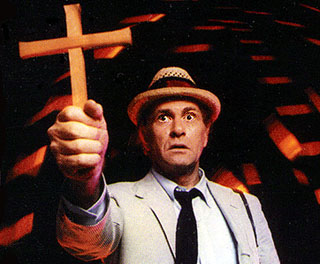
My memories of this series, starring Darren McGavin as Chicago newspaper reporter Carl Kolchak, are spotty but intense. So let’s skip straight to them by examining each of the entries in the series, starting with a quick background.
The series grew out of two TV movies written by the masterful Richard Matheson. The first Movie-of-the-Week, The Night Stalker, was based on a novel by Jeff Rice, The Kolchak Papers. (The novel was re-released under the title Kolchak: The Night Stalker to tie in to the movie.) Produced by Dan Curtis (creator of Dark Shadows) and directed by John Llewellyn Moxey, it had Carol Lynley (one of the survivors of The Poseidon Adventure) as Kolchak’s love interest, and Simon Oakland as his irritable editor, and Barry Atwater as Janos Skorzeny, a vampire loose in Las Vegas. Some of the other names on the bill included Claude Akins, Elisha Cook Jr., and Larry Linville.
According to Internet sources, The Night Stalker was the highest-rated TV movie of the year (it aired Jan. 11, 1972), and Matheson won the Edgar Award from the Mystery Writers of America in 1973 for Best TV Feature or Miniseries Teleplay. Theme music composer Gil Mellé also scored The Questor Tapes (and you can hear similar themes there).
I first saw the original movie on its initial broadcast, watching it on a small black-and-white TV in my Uncle Joe’s room at the Massey home until it got to be too spooky, and I moved to the family room for the last act, where I could safely stand in the kitchen door to keep an eye on the set. I was 7, and already had been traumatized by watching the original Bela Lugosi Dracula on an afternoon broadcast when I was 6; that viewing made me wander the halls of our house at night, afraid the vampire was inside (I know, it was stupid for a kid to guard his home against Dracula, but did you notice the use of the word “traumatized”?).
This time, I was carrying fear of Skorzeny around when we moved into a new house and my Uncle Joe thought it would be hilarious to make noises outside my window the night we moved in; I looked out, and he jumped up to scare me, and I ran screaming down the hallway to where the adults were in the living room. I seem to recall Joe (who was about 14 years old) getting a sound spanking as a result.
Matheson also wrote the sequel telefilm, The Night Strangler, which broadcast a year later, Jan. 16, 1973. (This time, Rice wrote a novelization of the Matheson script.) This was the tale of a serial murderer in Seattle who drained the blood of his victims to feed his immortality. The cast included Jo Ann Pflug as Kolchak’s new love interest, and Simon Oakland as his still long-suffering editor. Others in the cast included Richard Anderson (known for The Six-Million Dollar Man), Wally Cox, Margaret (Wicked Witch of the West) Hamilton, John Carradine, and Al (Grandpa Munster) Lewis.
I remember watching this one from behind the kitchen counter at my Aunt Dot and Uncle Edgar Croley’s house. (Apparently, "comfort food" means something different to me than most people.) Again, the adults were in the living room, or possibly at the dining room table playing cards. I wasn’t as terrified by this one, and the idea of Kolchak discovering clues that exposed the immortal’s long life (like photos of him from different time periods) was chilling and compelling. (Too bad it has been overdone in genre films and movies since then.)
(Many years later, I had the weird experience one night in my teens of watching TV when Star Trek was being shown in a late time slot, followed by a scary movie — and first, the local station showed a news program looking at the “known facts” of the Ripper murders; the Star Trek episode that night was “Wolf in the Fold,” about a non-physical entity called “Redjac” that was responsible for the Ripper murders; followed by The Night Strangler. The news program mentioned other, later killings that were similar to those attributed to Jack the Ripper; Trek listed “Redjac” killings at various times throughout history; and then Strangler played with the same “periodic resurgence of murder” concept. I have often wondered if anyone else noticed the same synchronicity that night.)
At any rate, ABC recognized a hit, and rather than order up another TV movie (apparently Matheson and William F. Nolan (co-creator of the original Logan’s Run novel) had already written a script for The Night Killers, which would have pit Kolchak against androids), the network ordered a series.
Here’s a personal episode guide:
The Ripper — Director Allen Baron, writer Rudolph Borchert; aired Sept. 13, 1974. Another serial killer, this time actually Jack the Ripper.
The Zombie — Director Alex Grasshoff, writers Zekial Marko and David Chase (who would later create the HBO series The Sopranos); aired Sept. 20, 1974. A woman turns her grandson into a voodoo-style zombie slave.
They Have Been, They Are, They Will Be... — Director Allen Baron, writer Rudolph Borchert (story by Dennis Clark); aired Sept. 27, 1974. In what ABC beancounters must have seen as a brilliant move, no makeup effects are needed after a UFO lands and an invisible alien attacks, draining the bone marrow of victims. (I was 10 and knew they were getting off easy. It’s one thing to “hide” a monster in the dark, and another thing altogether to make “invisibility” frightening. They failed.) Unlike every other episode, which finds our hero somehow foiling the monster, Kolchak fails and the alien returns to the stars.
The Vampire — Director Don Weis, writer David Chase (story by Bill Stratton); aired         October 4, 1974. Kolchak discovers that one of Skorzeny’s victims survived as a vampire; she has made the mistake of moving to L.A., where he gets on her trail. I recall this one being as creepy in many ways as the original telefilm.
(After this episode aired, the series, originally titled “The Night Stalker,” went on a hiatus, and when it returned, it had a new title, “Kolchak: The Night Stalker.”)
The Werewolf — Director Allen Baron, writers David Chase and Paul Playdon; aired Nov. 1, 1974. Kolchak goes on a sea cruise and discovers a werewolf killing passengers under the pretty moon. Watched this at the Massey house, which means it was at least memorable, but even as a 10-year-old I knew it was a goofy premise. Caught it on a rerun at home on my old black-and-white TV.
Firefall — Director Don Weis, writer Bill S. Ballinger; aired Nov. 8, 1974. Not too sure I even remember this one. I know I watched it, but it left no impression. It involved a ghost who tries to possess a conductor’s body.
The Devil’s Platform — Director Allen Baron, writer Donn Mullally, story by Tim Maschler; aired Nov. 15, 1974. This one gave me chills for a different reason. Yes, I have always been scared silly by stories about Satan or demons, but this one introduced me to the idea that politicians and authority figures might have an evil agenda; it’s a lesson I’ve learned over and over again in adult life.
Bad Medicine — Director Alex Grasshoff, writers L. Ford Neale and John Huff; aired Nov. 29, 1974. A Native American shaman spirit is committing murders to settle a debt so his spirit can move on. Looking back, it was a precursor for other Indian-legend scares, like The Manitou, and it stoked my interest in Native American beliefs.
The Spanish Moss Murders — Director Gordon Hessler, writers Al Friedman and David Chase, story by Friedman; aired Dec. 6, 1974. I remember this as the “Swamp Thing” episode, as I had read Uncle Joe's few issues of the early Swamp Thing comic by Len Wein and Berni Wrightson, and the moss-encrusted creature birthed from nightmares in this episode seemed to originate from the same region of our collective unconscious.
The Energy Eater — Director Alex Grasshoff, writers Arthur Rowe and Rudolph Bochert, story by Rowe; aired Dec. 13, 1974. Another Native American legend comes to life after a hospital is constructed on land that originally belonged to a tribe. I remember watching this one on a TV in our family room in the “new” house, the one my parents built when I was in second grade (the same one where Uncle Joe scared me).
Horror In The Heights — Director Michael T. Caffey, writer Jimmy Sangster; aired Dec. 20, 1974. I don’t think I understood what this one was about at the time, as it involved a Jewish community being attacked by a Hindu demon and somehow also worked in the swastika (which is a Hindu symbol meant to invite the goddess Lakshmi to visit a home during festival time). A bit confusing for a 10-year-old watching this in the family room.
Mr. R.I.N.G. — Director Gene Levitt, writers L. Ford Neale and John Huff; aired Jan. 10, 1975. The anti-Questor kills whoever it feels threatened by. Kind of a straight-up story, much easier for me to digest. Still didn’t stop me from wanting to be an android.
Primal Scream — Director Robert Scheerer, writers Bill S. Ballinger and David Chase; aired Jan. 17, 1975. Cells discovered in the arctic ice result in deformed homicidal hominids. In my brain, it exists as a precursor to “A Cold Night’s Death,” a 1977 TV movie starring Robert Culp, and even the recent Syfy series Helix.
The Trevi Collection — Director Don Weis, writer Rudolph Borchert; aired Jan. 24, 1975. High fashion meets witchcraft in another tale I have little memory of.
Chopper — Director Bruce Kessler, writers Steve Fisher and David Chase, from a story by Robert Zemeckis & Bob Gale (the first professional writing credit for the guys who created Back to the Future); aired Jan. 31, 1975. The Headless Horseman legend becomes a story of a headless motorcyclist bent on vengeance.
Demon In Lace — Director Don Weis, writers Stephen Lord, Michael Kozoll and David Chase, from a story by Lord; aired Feb. 7, 1975. A Sumerian succubus stays young by murdering young men; a story that never gets old, as it has cropped up innumerable times over the years.
Legacy of Terror — Director Don McDougall, writer Arthur Rowe; aired Feb. 14, 1975. Not much of a Valentine's Day episode, this time Kolchak fights an Aztec cult trying to resurrect the mummy of their god.
 The Knightly Murders — Director Vincent McEveety, writers Michael Kozoll and David Chase, story by Paul Magistretti; aired March 7, 1975. The ghost of a knight inhabits its former suit of armor and kills people.
The Youth Killer — Director Don McDougall, writer Rudolph Borchert; aired March 14, 1975. Cathy Lee Crosby (who also starred as Wonder Woman in a contemporary pilot) plays Helen of Troy, who sacrifices victims to Hecate to maintain her eternal youth.
The Sentry — Director Seymour Robbie, writers L. Ford Neale and John Huff; aired March 28, 1975. The Star Trek Gorn is takes the place of the Horta in a reworked version of the classic Trekisode "Devil in the Dark." This time it's a lizard creature that kills men working underground because they've stolen its eggs. I watched this on in my friend Randy's house, on a black-and-white set in his parent's room.
Although its stories seemed derivative, it's interesting to me how many modern series have dipped into Kolchak's well, such as The X-Files, where Darren McGavin played a character that supposedly founded the X-Files division. (McGavin also returned in a digital cameo in the pilot for the remade (and doomed) Night Stalker series in 2005, but that's another story.)

Thursday, July 30, 2015

Con founder opening new horizons

Jayson and son at a signing event.
PANAMA CITY — I grabbed a coffee with JaysonKretzer, graphic artist and founder of Panama City Creative Con, last week to catch up on his efforts to finalize the event.

I’ve known Jayson for a while. I know he likes superhero stories with at least a hint of sunshine in them. Heroes who want to be heroes, who fight for a better world and believe that’s an achievable goal.

Turns out, that’s kind of what he’s all about. He started CreativeCon to give youngsters an opportunity he missed as a child — to be exposed to creative career paths and meet potential mentors, while celebrating the imagination.

“From the time I was a pre-teen and received my first comic book, I was intrigued by art,” Jayson said in a letter to art teachers that he circulated to promote the event. “That’s also when I figured out I was a visual learner.”

But he had no idea how to pursue art as a career. Growing up in the Northwest Florida Panhandle, he never had the opportunity to meet artists in his chosen field or even learn about educational opportunities to enter creative fields.

Finally, at age 25, he attended a comic convention, where he met many industry professionals face-to-face who helped put him on the right track. Now, for more than 15 years, Jayson has worked from home doing freelance illustration, graphic arts and website design. His work also includes sketch cards created for Marvel- and Cartoon Network-licensed products and two self-published books. In addition, he teaches drawing classes in schools and other venues.

Twenty years after he graduated from high school, comic book movies dominate the big screen while graphic novels are moving into classrooms as a learning tool. Between those very visible media, plus the growing popularity of web comics and cinematic video games, Jayson has seen “a renewed interest in sequential art.”

Seeing all that developing on the horizon, Jayson wanted to give children and teens the chance he didn’t have until adulthood; he wanted to establish a convention that would inspire them to be lifelong creators.

“The goal of Creative Con is three-fold,” Kretzer said. “One: To give young people in our area access to mentors in the field they are interested in. Two: To show K-12 students educational opportunities in our area that will help them fulfill their dreams. And three: To provide children with the tools they need to succeed — staying right here.”

Even here in the Panhandle, where it seems like the 21st century is still just getting a foothold, you can make a go of it in creative fields. And you can help others follow their dreams as well.


Peace.

Saturday, July 18, 2015

Drive-In Saturday: The Doctor is Out — way, way out

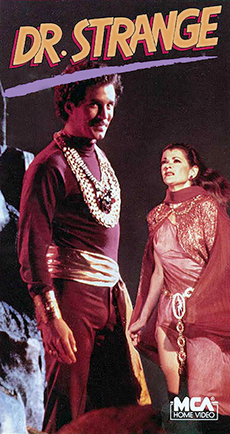
VHS Cover
Dr. Strange (CBS-TV pilot aired Sept. 6, 1978)
Starring Peter Hooten as Dr. Stephen Strange; with Jessica Walter and John Mills 

If you’ve got a fever for fantasy TV even the Winds of Watoomb won’t quell, then this might be just the prescription.

Doctor Strange, The Master of the Mystic Arts and Sorcerer Supreme created for Marvel Comics by writer Stan Lee and artist Steve Ditko, first appeared in Strange Tales No. 110, dated July 1963, a year before I was born.

He came to television in a much watered-down version, via a pilot film that even abbreviated Strange’s title as Dr. Strange, in the autumn after I turned 14. I was already a fan of the source material and at the perfect age for a good horror-tinged magical adventure. I watched the show on my Dad’s TV in the living room area of a mobile home he was renting in Gonzales, Florida, if I'm recalling correctly.

It was miles ahead of other Comics-to-TV efforts of the era, from a Hulk with green body paint, to a Spider-Man who couldn’t realistically fight bank robbers (much less a super villain), to a Captain America who traded his winged mask for a motorcycle helmet. At least with Strange you got to see magic lightning bolts and weird dimensions.

Disco Strange
The treatment was written and directed by Philip DeGuere, whose writing credits included episodes of Bionic Woman, Baretta, Alias Smith and Jones, and many others, and who would go on to create Simon & Simon and much more. A made-for-TV movie intended as a pilot for a potential TV series, Dr. Strange even had Stan Lee as a consultant.

The movie diverged from the original material, although Lee apparently felt it was one of the better of Marvel’s 1970s TV adaptations. In an interview published in Comics Feature magazine (January 1985), Lee recalled being “pleased with Dr. Strange and The (Incredible) Hulk.” He added that Strange might have had higher ratings if it hadn’t been broadcast opposite Roots.

In the comics, Stephen Strange is a gifted but arrogant surgeon who loses his dexterity after a car crash and becomes a drunk because he can’t make tons of cash as a surgeon any more. Hearing talk of an “Ancient One” in Tibet who can heal anyone, he travels there on a quest to restore his hands so he can regain his medical practice.

Instead, he is initiated into the hidden world of magicians and eventually becomes the “Sorcerer Supreme” of Earth. He takes on a servant, Wong, and lives in a weird brownstone in Greenwich Village, NYC. And he soon gets a hot silver-haired girlfriend from another dimension, Clea, who becomes his pupil as well as his lover.

Strange has adventures in other dimensions, superbly psychedelic and appropriate for the 1960s, as originally conceived by Ditko. He fights entities like Mephisto, Nightmare and Dormammu, as well as his mortal enemy, Baron Mordo. He hangs out in his Sanctum Sanctorum and gets into scraps alongside the Defenders (initially, Silver Surfer, Hulk and Namor the Submariner).

These battles and other-dimensional jaunts were beyond the scope of 1978-era special effects (at least, on a TV movie budget), but the pilot film makes a valiant effort. Before it’s over, Strange visits a nether-dimension, we catch glimpses of the demon Balzaroth (voiced by Ted “Lurch” Cassidy, uncredited), and our cast exchange magic lightning blasts.

It’s the changes to the mythos for its TV incarnation that don’t ring true to this True Believer, and one wonders if they were made for fear of how audiences would respond to an Asian master in post-Vietnam USA, or a devilish Mephisto (this was a time when Bible-thumping caused all sorts of censorship in fantasy TV; Google some of the censors’ reactions to Star Trek reruns some time just to boggle your mind).

Wong and Lindmer
For example, the Ancient One is now a disembodied voice (the late, great Michael Ansara, uncredited), while Strange’s mentor is now the British actor Sir John Mills as Thomas Lindmer (or “Merlin” — get it?). Strange (played by Peter Hooten and his spectacular disco mustachio and Caucasian afro) is a thoughtful, slow-to-act psychiatrist who initially seems to get his magic mojo from a ring left to him by his father.

The usually mesmerizing Jessica Walter (lately seen on Arrested Development and heard on Archer) plays Morgan Le Fay, Merlin’s old enemy (who was, as you may recall from repeated viewings of Excalibur, the half-sister of King Arthur and the mother of his bastard son, Mordred). While she is physically voluptuous and tempting in her low-cut tops, her delivery of dialogue is flat, and she’s played a bit too cold for you to ever believe Strange could be swayed to her side of the battle.

Clea is presented as a college student haunted by Morgan; she’s played by Eddie Benton (who later acted under the name Anne-Marie Martin in episodes of Buck Rogers and other 1980s shows, but is perhaps best known as co-writer of the 1996 film Twister with her then-husband, the late author Michael Crichton). Clea falls under Morgan’s spell, and Strange seeks alternative therapies for her.

Strange and Morgana
Lindmer tries to convince Strange that the girl’s troubles are magical rather than medical; he’s also trying to prepare Strange to follow in his footsteps as the next Sorcerer Supreme.

The film opens with an image to excite any Strange fan’s heart: We’re in a weird realm of rocky islands floating in space. A stop-motion demon gives Morgan the chance to redeem her earlier failures by defeating Lindmer and turning his chosen apprentice to the Dark Side, or some such. So far, so good.

But the interest dissipates pretty fast. The film becomes overly talky, and little action of any consequence takes place for the next hour, putting the majority of effects and action in the final segment of the show. Strange doesn’t even dress — well, strange — until the last act, first in a very cool cloak and chains bestowed on him by Morgan, and later in a lame disco blouse with a starburst and yellow cape. Both costumes hearken to the various comic versions of Strange’s attire, but neither one captures the spirit.

Strange by any Other Name
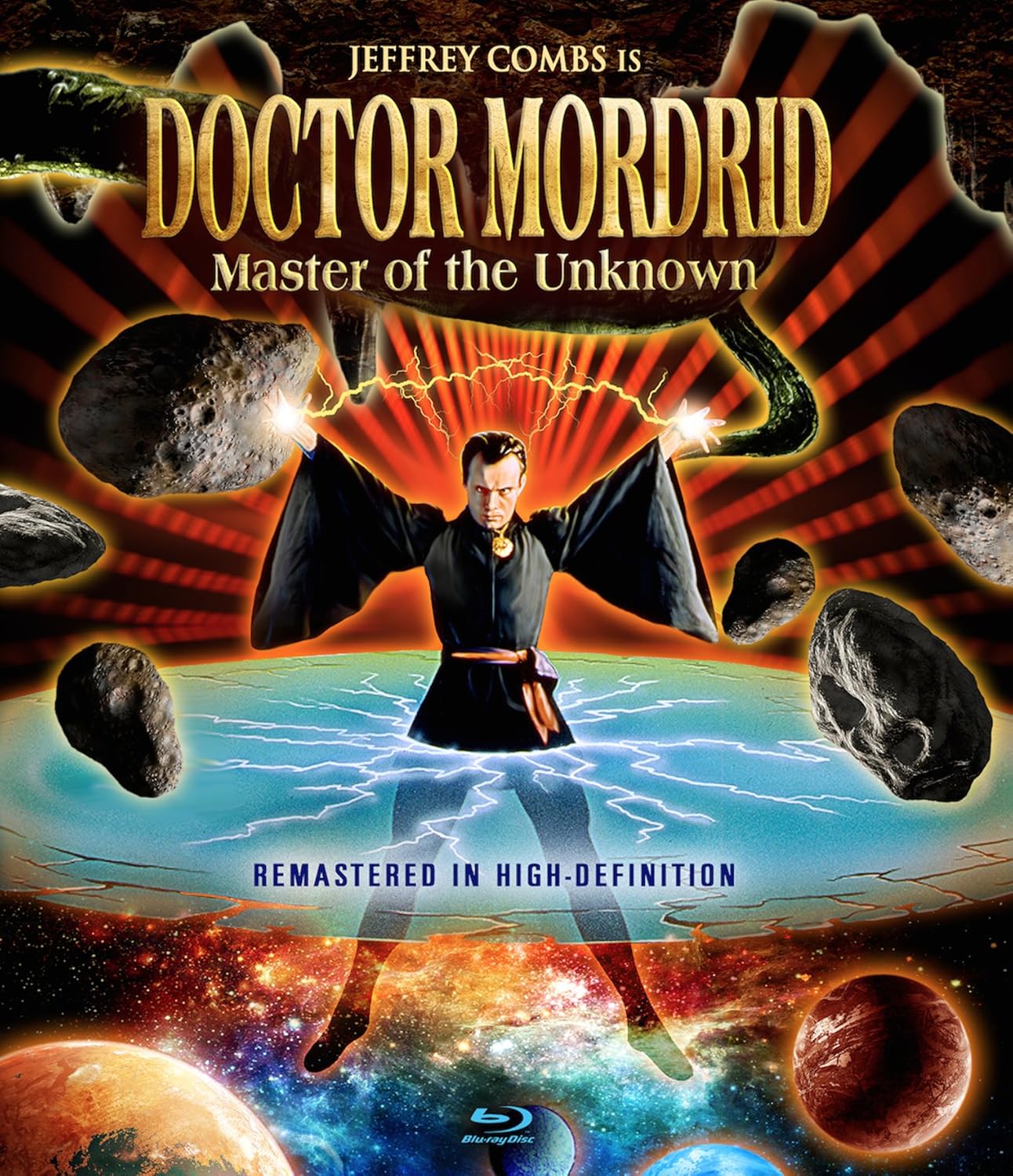
(NOTE: The low-budget movie grindhouse, Full Moon Features, made a Strange-esque film called Doctor Mordrid in 1992 after losing the option for Doctor Strange; it starred Jeffery Combs as an ageless sorcerer assigned to protect our world, and it’s worth checking out. Also pretty good is the 2007 direct to DVD animated feature Doctor Strange: The Sorcerer Supreme from Marvel Studios.)

Over the years, the comic Strange has been rebooted, retooled and refocused. He’s been de-aged, split into multiple persons with different names, and even gave up his face for a while, replacing it with a blue “mask.”

Likewise, in some writers’ hands, he’s selfless and heroic, while others paint him as distant and possibly deviant, acting to protect his own power base as much as the innocent souls in this reality. His recent appearance in Matt Fraction’s short-lived Defenders title made him a little scary.

I always was happier seeing Strange as a mixture of the two extremes, much as he was initially portrayed: A self-righteous man who was knocked down, broken, and in the process of rebuilding himself spiritually as he learns to serve others — a hero overcoming deep faults against massive odds.

That’s kind of what this pilot film embodies: It’s obviously broken, but it contains enough magic to make you believe that, if it had gone to series, it could have developed into something deeper — until you realize it was the 1970s and even the Hoary Hosts of Hoggoth couldn’t have energized it enough.

We’re probably better off watching Kolchak reruns, dreaming of what might have been, and looking forward to a Marvel motion picture starring Benedict Cumberbatch and Tilda Swinton. But until then, here's  the whole movie from YouTube:

Friday, July 17, 2015

You can pick your friends

Jim picking figs.
VERNON — They tell me you can’t pick your family, but you can pick your friends. Sometimes, I think, they pick you.

One of those that welcomed us into the fold in recent years is Jim Weslowski, and his wife Delia, who run Weslowski Farms near Vernon. Friendly conversations at the Bay County Farmers Market led to invitations to pick fruits and berries at the farm, which led to conversations around blueberry bushes.

Before you know it, it’s 100 degrees and you’re talking about the proper care of a papaya tree.

Riding his red tractor last Sunday, Jim led us (in our car) up the back way to the fig tree grove by his house — across grass that took us past chestnut, blueberry and pear trees, then onto a two-rut trail that a wagon might have followed 200 years ago, and up 1,600 feet of incline to the house at the top of the hill.

We couldn’t take the front approach because he hadn’t graded the drive in a while and, he said, “As soon as I fill the holes, it will rain.”

My wife and I picked figs while Jim filled holes anyway, and I was careful this time not to scratch my face or use my hand to wipe sweat from my eyes; last year, I had a reaction to the milky sap of the figs that set my skin on fire (or so it felt). It was worth it for the preserves and jams my wife made, but it didn’t seem so at the time.

After filling a couple of flats, we descended the hill to pick pears. Jim told us he would quit working when we did, and we promised he wouldn’t have to sweat much longer — the heat would keep us from taking too long. The thermometer on the car’s dashboard registered 98 degrees at 11 a.m.

We used a little step ladder to reach the higher pears, as Jim already had grabbed the ones low enough to reach from the ground. Jim and Delia have been selling them at local farmers markets, alongside all the other produce from his farm. (You can usually find Jim at the Bay County Fairgrounds Farmers Market every day except Sundays and Thursdays, and Delia at the Lynn Haven Farmers Market on Tuesdays and the St. Andrews Waterfront Market on Saturdays.)

It wasn’t our first trip to the farm this summer; in June I took my niece there to pick blueberries. And I hope it won’t be our last visit. Jim is really good at teaching and explaining how best to process the produce he and Delia grow, as well as how to care for your own vegetables and fruit trees. There’s always something new to learn, and he’s generous as a teacher and grower.

In fact, Jim and Delia will host their annual open house, autumn farm tour and barbecue cookout in November. Guests will get to view the fall/winter crops, make some fresh lemonade, learn about the fruit trees, and much more. Like Weslowski-Farms on Facebook for details.

Delia — under a wide-brimmed hat and long-sleeved shirt — ran a mower through the grass while we picked. The work on a farm never ends, although Jim suggested he could quit any time he wanted to.

“She’ll say, ‘Honey, you need to go do so-and-so,’” Jim said with a grin. “I’ll say, ‘I don’t have to do anything. I’m retired.’”


Peace.

Thursday, July 16, 2015

Reviewer: Simmons' latest is fearful symmetry

S. Brady Calhoun of The News Herald reviewed "Giants in the Earth" this week.
>>Here's the article<<

"The thing that strikes you first, like classical music in the back of your mind, is the dreamlike and lyrical quality of 'Giants in the Earth.'"

Thanks, Brady!

Monday, July 13, 2015

Writers' Jargon (10)

Writers have their own language. A shorthand, if you will. Outsiders (non-writers) think they know what most of these words and phrases mean. But they don't. Here, in a continuing series of posts, I will divulge the SECRET MEANINGS OF WRITERS' JARGON:

Hero’s Journey: (cartographic term) The shortest route to the nearest sandwich shop.

Proposal: (verb) technique employed by non-fiction writers to trick a gainfully-employed partner into marriage when you have no prospects for other income; also used to convince publishers your idea for a book is worth funding. In either case, it’s a pay-for-play agreement.

Editor: (noun) Heart-breaker. Dream-maker. Love-taker. Don’t you mess around with me.

Sunday, July 12, 2015

Artist's Touch: Couple’s passion for creative costuming

  • PC CREATIVE CON
  • When: 10 a.m. to 6 p.m. Aug. 1
  • Where: Student Union building and Amelia Tapper Center at Gulf Coast State College in Panama City
  • Why: Guest artists, costume contest, film festival, writers workshop, breaking into comics, warp-speed dating, celebrity panel and more
  • Admission: $10
  • Details: PCcreativeCon.com


C&C Cosplay at Pensacon 2014
PANAMA CITY — I first met Chris Stock and Christina Gilbert in a steampunk panel at Pensacon, a sci-fi convention in Pensacola, in February 2014. He was disguised as The Winter Soldier and she was Black Widow, a pair of Marvel Comics characters that were appearing in the new Captain America movie at the time.

It was his second big convention, and her first, and they assured me they were “super nerds, basically.” They’ve been actively building a reputation as creative costume designers and character players (i.e., “cosplayers”) ever since, and will present a panel for beginning cosplayers at PC Creative Con in Panama City on Aug. 1.

I recently visited them at the Dragon Dojo off State 390, where Chris works as an instructor, to talk about their passion.

“My dad read comics, and he thought comics would get me into reading — and he was right,” said Chris, 23, who was born and raised in Panama City.

As a child, Chris became a fan of The Mighty Morphin Power Rangers — specifically, “Billy” the Blue Ranger, who was a massive nerd. Since he couldn’t become a Power Ranger in real life, Chris focused on the martial arts aspect, and under mentor Dorje Jangbu has become an instructor. One of the highlights of his life, he said, was meeting David Yost the actor who played Billy, at Pensacon. Chris hopes his cosplay can serve as an inspiration as well.

“When you see someone really appreciates it, it touches you,” he said. “It not only inspires them, it inspires you to keep going.”

Photo: Daron Adkins Photography
Christina, 28, is originally from Dothan, Ala., but has lived in the Panama City since she was 9. A hair stylist and operator of the local Shear Design, she has two daughters, ages 4 and 6. Chris’ interest in costumes drew her in, and she has a particular interest in steampunk (a subgenre of sci-fi that derives from 19th-century steam-powered technology and aesthetics).

“It’s a way for me, personally, to escape from reality for a few hours,” she said of building props, making costumes, and playing dress-up. “And when someone compliments your work and wants a picture with you, that’s great.”

Chris keeps composition notebooks filled with designs, doodles, patterns and ideas. He uses it to work out details, like the knotwork design on the edges of his home-built Mjolnir (the hammer of Marvel Comics’ Thor), or the horned helmet of a gender-swapped Loki. Then the projects take shape in his workshop — i.e., apartment.

“Our apartment has little projects all over the place,” Christina said, mentioning Captain America’s shield, which hangs in their laundry room.

Winter Soldier was Chris’ first full costume, and the character’s “robotic” arm was created by riveting dozens of individual pieces together. (Chris has added some muscle since creating the costume, and the riveted arm no longer fits him.)

“Before that, I basically did anime characters (from Japanese cartoons), but Winter Soldier I really spent time on,” he said. “I built everything but the pants and shoes. I broke down each part. It was — a lot of hours.”

Chris and Christina discussed how they created many of their costumes and props — from a repainted toy gun or a dowel that became a walking cane, to a wiffle bat repurposed as Harley Quinn’s weapon of choice and socks that became her elbow-length gloves. The most important aspect of building these items, they said, is the willingness to make mistakes and learn from them.

“I find nothing but flaws in everything I do,” Chris said. “I’m a perfectionist. But art is being able to make a mistake look beautiful. Art is never finished, you just walk away from it.”

BASIC COSPLAY TIPS
C&C Cosplay offered these basic considerations to prospective cosplayers:

•Dress for the weather. “You don’t want to walk around wearing a skimpy Harley Quinn costume in February,” Christina said — a lesson she learned the cold way.

•Props don’t have to be functional, they just need to look right and feel good. “You don’t need to actually be able to climb up walls if you’re (dressed as) Spider-Man,” Chris said. “It’s a costume. It’s all about the look. ... But whether it’s a prop or costume, if it’s not comfortable, you’re going to hate it.”

•Make sure you can move, see, fit through doorways, sit down — and get out of the costume for bathroom breaks. “I’ve seen this happen badly,” Chris said. “If you’re going to design a really complicated costume, make sure you know how to go to the restroom. I suggest wearing it a full day around the house before you go to a con.”


•Most of all, have fun. Be creative. And feel free to ask other people for help.