Showing posts with label writers i know. Show all posts

Friday, August 26, 2016

'Adventures in the Arcane' gets some ink

Adventures in the Arcane

A Syndicate Publication
$5.99 in print
$1.99 on Kindle
 
This new anthology of four tales and three essays reignites the fire of old-fashioned weird pulp adventure. It was featured today in The News Herald's weekend Entertainer section.
 
It will make its debut at Panama City Creative Con on Sept. 16-18.
 
Here's the cool book trailer I made:


Some days the evil loose in the world can’t be beaten by two fists, a trusty sidekick, and a pump shotgun.

Some nights reek of deep time, musty tombs, and creatures spawned from beyond the stars.

When monsters attack, you need heroes with a strong moral compass...and a little supernatural help.

Adventures in the Arcane contains four fantastic stories of pulp heroes, werewolves, pirates, and wizards. Prepare to be thrilled! A Syndicate Production featuring the work of Mark Boss, S. Brady Calhoun, Lou Columbus, Jayson Kretzer and Tony Simmons. 

Saturday, April 30, 2016

Books Alive 2016 Photo Blog

Books Alive returned last weekend, expanded to three days and moved to venues in downtown Panama City. Here are some of the moments I managed to record:
Ginger Littleton, me, and Cheri Leistner (Books Alive committee members)

Local authors area at the Civic Center

Cool projections by Public Eye featured the local authors' work

David Angier, me


Me with Mary McDonough (Erin Walton)


JD from Public Eye and author Milinda Stephenson


Rick Bragg with a Destin book club


Connie Gittard introduces Ellen Urbani, Annie Quinn & Mary McDonough


Kwame Alexander, Kathie Bennett, and Mr. & Mrs. Middlemas


Kwame Alexander meets a young future reader.


Librarian Sandra Pierce and author Olivia Cooley


Refreshments at the library


Margaret Webster of Public Eye & Jennifer Jones of Bay Arts Alliance

Thursday, November 05, 2015

Throwback Thursday: Not Fade Away

(This column originally published in The News Herald on Sunday, November 14, 2010)

Not fade away: Connecting across time and space


Surrounded and bolstered by kindred spirits on Thursday night, Wewahitchka-based author Michael Lister talked about the sacred calling of the storyteller. He used the word “shaman” to convey the mystical connection between the teller and the listener.

Like an alchemical equation seeking balance, the work birthed in the act of creating art can’t reach maturity until the work is interpreted. Otherwise creation is the silence in the forest when a tree falls and no one is there to hear it.

It’s the sound of one hand clapping.

Michael’s words, as usual, started me thinking. In particular, I recalled a few events of the past week where the things people said (or wrote) and the things I heard (or read) connected with memory to
create new meaning. You never know what people will say, or how the things they say will stick with you and bubble to the surface of your thoughts.

A couple of examples:
I visited the set of “A Doll’s House” on the Amelia Center Theater stage at Gulf Coast Community College this week. Decorated for Christmas, the lights and baubles stood in stark contrast to the dull walls and furnishings in shades of brown. It looked like a scene out of “A Christmas Story.”

The play is set in 1950s Chicago, and the short sequence I viewed made me think about those folks on our Squall Line who want their country back — one of whom even went so far this week to type on his or her computer that “The 1950s was a better time.”

On stage, the husband teased his wife with $10 bills that she greedily snatched from him, one by one, and promised to spend wisely. He called her pet names and spoke in soothing tones, making sure she understood her place and function in his world.

I was reminded of an early Saturday morning recently, when an older man joked about spending his entire “allowance” on yard sales. He circled among some tables stacked with colorful trinkets and clothing, asking silly questions and flirting with the ladies at the sale. Suddenly, he grew quiet.

“I was married three times,” this total stranger said to me, his breath misting in the morning cold. “I left the first one, the second one left me, and the third died. She was the only one who ever said she loved me. She was the only one I ever loved.”

He cleared a lump in his throat and pointed at a coffee maker designed for one person.

“Is that real or a toy?” he said, and I told him I believed that it was real.

He bought it and drove away alone.
Peace.

Tuesday, October 27, 2015

Behind the Writing (Part 3): Refilling the Creative Well

The following is the last in a three-part series about the craft of writing, specifically characters and situations, why we write stories, and how to refill the creative well. These conversations took place in early October 2015 with author Mark Boss and myself.

>>Click here to read the first installment<<
>>Or here to read the second one<<

Mark Boss, our friend Carole, and me at Books Alive 2015.

Mark: One last thought. I’ve been thinking about this one a lot lately. I’m convinced — you’re torn so many different ways. You’re expected to blog, you’re expected to tweet and Facebook and all these different things. But every time you do that during the day, I think you use up a little bit of creative energy. Maybe not a lot, but a little bit. And then you have to wonder, is there any left over when you actually go to write? So my question is not whether that’s worthwhile or not — because it’s probably necessary — but rather, how do you refill the well after you’re tapped out, after a long week or a month, or even when you finish a long project? Because with a book, you might be committing to a year or two’s worth or work.

Tony: And that last push leaves you with the thousand-yard stare.

Mark: And by the end, you’re a zombie. How to you refill the well? What goes into that to bring the water level back up? ... I find that I do a flurry a reading as soon as I’m done (writing) a book. All the stuff that’s been piling up on the Kindle or in stacks, and not just fiction, a lot of non-fiction. When I’m working, I might be reading about 50/50. But afterward, man, I’ve got to fill my brain back up. There’s wanting to catch up on all the TV shows you missed and all the movies you didn’t see. So, for like a month, I go nuts. But then, pretty soon, there’s that itch like, man, I’ve got to write something. You can’t wait until you feel full again to start writing.

Tony: For me, there’s a couple of things. One is, I give myself permission not to be obsessed or upset that I’m not writing. I didn’t always do that. I don’t really do a lot of reading while I’m in the middle of a project. I’ll read a comic book, or magazine articles, watch TV for an hour or two — during the writing process. After the writing, I want to go somewhere.
Mark: A change of scenery, literally, to refresh the brain.

Tony: Clear the palate, yeah, and I think that’s why going up to visit Birmingham even jumpstarted that (steampunk novel) idea. I was in the middle of a project, and it was driving me crazy trying to finish it so I could start the new one. I was writing notes on one and working on the other. That’s one thing I do, even if it’s just taking a day, me and my wife going to Apalachicola (about a 90-minute drive from home) and walking around. Just something to change the surroundings for a few hours and get your head out of the space it’s been in.

Mark: Get away from the computer. Plus, you bring up the point: Even though you have anew idea in your head, the discipline — the part that’s the difference between being a professional and not — is that you finish the project you’re on. And then you start the next one. You don’t get distracted and start something else. It’s a small point, but important for other writers out there, and readers.

Tony: Yeah, there’s really only two rules: (/Holds up one finger/) Sit your ass in the chair and write. (/Holds up second finger/) Finish what you start. Even if that means just getting to a stopping point. I spent too many years dropping a project and starting something new, just to drop that too.

Mark: I think that happens a lot.

Tony: Somebody said it’s like being in love. You’re committed to this project, and all of a sudden you see this nice shiny new idea over there. And you’re like, this project is just not as pretty as I thought she was. She makes me work too hard. But this idea is exciting. I think I’ll go play with this one a while.

Mark: I think it’s fear. I think people fear finishing. When you’re done, the dream is over. Now it’s time to let go. I really do think fear plays a big part in that. It’s easier to tinker than to finish.

Tony: Today, that fear goes even further. I can submit to all these (traditional publishers) and if they say no, then in the old days that was the end of the story. Now you can publish yourself so fairly easily that you don’t have any excuse to keep it hidden away in a drawer.

Mark: You can’t say, “Well, they kept me out. I never got my shot. I never had a chance.” Now, your baby has to get out there and compete, and it might get beat up on the playground. Those are my deep thoughts I had recently.

Tony: I appreciate it, because I had no deep thoughts to bring to the table.

Mark: You’re good at spontaneous deep thinking.

Tony: Or bullshitting.

Mark: It’s a craft.

Tony: It can be learned.

>>Check out Mark’s stories, available in ebook and paperback at Amazon.<<

Friday, October 23, 2015

Former narcotics agent begins third chapter


Merle & Judy with actor Shemar Moore
MEET THE AUTHOR
  • Who: Merle Sheppard, author of “Ghostly Shade of Pale”
  • Where and When: Sundog Books in Seaside 10 a.m. to noon Saturday, and Hidden Lantern Bookstore in Rosemary Beach 2-6 p.m. Saturday
  • Details: MerleTemple.com and Facebook.com/Merle.Temple.1

 
SEASIDE — Merle Temple, at age 67, has begun a new career as a novelist — a third career, after retiring from the law enforcement and communications. He has worked for the FBI, the Mississippi Bureau of Narcotics, and BellSouth. Now, he’s a successful author.

I caught up to him by telephone this week as he relaxed in Destin with his wife, Judy. They had been out birding, and he had recently spoken to a class at a Destin elementary school. He mused upon his new life and how it reflected in those youngsters, just starting their lives.

“These books have opened up a whole new world for us in our retirement years,” he said. “I didn’t know if anyone other than friends and loved ones would want to read them. ... I am so grateful that I lived long enough and survived so much tragedy to know who and what never mattered, and Who always will.”

His debut novel, “A Ghostly Shade of Pale” introduced the character of Michael Parker, which is based on Merle. Parker leaves Ole Miss in the early 1970s to enter America’s “War on Drugs.” He is kidnapped by heroin dealers and held hostage while working solo undercover. Later, he’s ambushed near Memphis by contract killers hired by the Dixie Mafia. When he becomes a captain, he and his men are ambushed in a heroin deal near Columbus by a sniper.

“Only the dramatic intervention of God saves the lives of agents that day,” Merle said, adding, “All these things and more really happened.”

Merle, originally from Tupelo, Miss., claims to have crossed paths with many of the iconic figures of the 20th century, including Margaret Thatcher, Charlton Heston, Ronald Reagan, George H.W. Bush, J. Edgar Hoover, Newt Gingrich, Dennis Hastert, and countless other senators, congressmen, governors and celebrities.

“I pull the curtain back to allow people to see Washington as it really is, and it is not a pretty sight — where everyone and everything is for sale,” he said.

The second book in the trilogy, “A Rented Love,” follows Parker into the corporate world and high-level politics. There, he finds that the organized crime figures who tried to kill him are choir boys compared to the political criminals he encounters in what Merle calls “the unholy trinity of crime, politics and business.”

Merle is currently at work on the final book in the trilogy, “The Redeemed,” in which Parker — a would-be dragonslayer — pays the price for his crusades and for opposing the power brokers. The treachery runs all the way to the White House, Merle hints.

 “So many I have known in politics love only power and money, but beyond that, so many of them refuse to surrender power even in old age and infirmity,” Merle said. “They made a Faustian deal to rule in hell on earth, rather than to serve eternally in heaven. They equate retirement with death, and they are terrified to stand before their maker. They know what they’ve done, and they know that the road is running out.”

The novels are being considered for adaptation into TV series by various Hollywood producers, which took Merle and Judy to the West Coast for meetings. They watched the filming of “Criminal Minds,” signed books for actors Joe Mantegna and Shemar Moore. The series writer-producer Jim Clemente is pitching “Ghostly” for Merle.

“I have written all my life in the public and private sector — speeches, technical papers,” he said. “People told me, ‘you have a gift of writing,’ but I found out fiction is difficult. It’s tricky to speak in other voices. It has so many threads in it, it’s so complex. It has been a real learning process.”

Merle also believes that what he writes and how he presents it is important. His work, placed in the public eye, is equivalent to the epitaph on his tombstone, he said, in that it’s how he will be remembered.

“My novels, written as fiction but drawn from my life, have no profanity or graphic intimacy,” he said. “They are written as literature to endure, and people love them for that reason. ... People are hungry right now for that, even if they’re gritty books, but behind it is a message that’s uplifting.”

Peace.

Tuesday, October 20, 2015

Behind the Writing (Part 2): Why do we write?

The following is the second in a three-part series about the craft of writing, specifically characters and situations, why we write stories, and how to refill the creative well. These conversations took place in early October 2015 with author Mark Boss and myself.

>>Click here to read the first installment.<<

Mark Boss
Mark: That brings me to my second question: What is it in us that demands that storytelling? I think you go to your caveman, and other people (with him) like stories but there’s probably only one person in the tribe or village that’s a storyteller, and he’s probably a shaman or he’s painting on the walls — “Oh, that was the best hunt ever!” (The number of storytellers is) probably a bigger percentage of the population now because the tools are available to write, but telling stories has always (come from) a small part of the population. I think it only feels big now because there’s so many people publishing. Why is it a small part, and why are people like us driven to tell stories?

Tony: If you strip all the publishing away from it and get down to storytelling, I think everybody tells stories. Every conversation we have with our loved ones, we’re telling stories. If my Mom calls and tells me about an uncle that’s not doing well, she’s storytelling. As a people, a species, we developed language and writing — well, in part to keep track of what we were telling —

Mark: To give it permanence, because we wanted to give stories multi-generations.

Tony: But in those days, and up until recently, most people couldn’t read and write, but everybody would go down to the square to hear the town crier tell what happened in the court, or gather around their radio to listen to serials.

Mark: My grandfather told stories on the porch, and neighbors would come over to listen.

Tony: When it comes to writing, I think the difference between most people and people like you and me is the difference between a child drawing a picture with crayons and the artist painting a landscape or portrait. We found something in us that felt fulfilled and we were drawn further to continue filling that empty hole in our hearts.

Mark: You’re so driven, you spend years learning the technical skills, just like a painter. You take it way beyond what most people would do because you spent all these years developing it. If everyone else did that, you’d have a lot more people who were writers. They’d end up at the same place.

Tony: It is a craft, and it can be taught. It can be learned. Those of us who felt drawn to it also had to learn it —

Mark: Over a long period of time —

Tony: With a lot of trial and error. … If I turn away from it for too long, as you do from time to time, I actually feel heartsick, like there’s something missing. That ‘something’ is telling those stories. At least, for me it is.

Mark: Sometimes it’s the only way I can cheer myself up. If I sit down and start writing, within an hour or two I’m smiling and happy again. It’s unreal. It’s weird how sometimes you purposely turn away from it, then you think, “What the heck was I thinking? Why am I not doing that?”

Tony: What are we hoping to do is to write something that’s going to affect somebody. That they’re going to carry with them, share with other people, and it’s going to make their world a better world, and it’s going to go on beyond you, after you’re long gone. Or, we could just be writing stories to have fun with. If we’re lucky, we’ll be like H. Rider Haggard and a hundred years after we’re gone people will still be making movies out of our stories.

In the next post, we’ll talk about how writers and readers can refill the creative well.

>>Check out Mark’s stories, available in ebook and paperback at Amazon.<<

Tuesday, October 13, 2015

Behind the Writing: PART 1: Characters or Situations?

The following is the first in a three-part series about the craft of writing, specifically characters and situations, why we write stories, and how to refill the creative well. These conversations took place in early October 2015 with author Mark Boss and myself.

Mark Boss at PC Creative Con 2K15
Mark: We were talking the other day about characters. You read Stephen King’s “On Writing,” and he says he always starts with a situation; I started thinking, how predominant is that? How many authors start with a situation versus starting with a character? When you told me about your Alabama trip, it seemed like the seed of it, the germ was the character first. What triggered that idea, and then did you build the situation around that character?

Tony: I think that story came out of inundating — immersing myself in a bunch of unrelated ideas. I’m in Birmingham, and there’s a lot of stuff about the Confederacy, it’s an iron town — that whole blacksmithy, iron works, steam era feel to it. And I’m reading a lot of steampunk. All of those things fed into the mulcher, and then, driving home, seeing those old Southern city names —

Mark: Specifically, Jemison and Thorsby. Were they in that order?

Tony: Yes.

Mark: Because you might not have thought of it (if they were in the reverse order).

Tony: Right. That came from character first, from a mixture of the names and a time period I had floating around in my head. So in a way, the situation was kind of already there. I was primed to find a story that was steeped in the Old South.

Mark: Which is quite a departure, because I’d say most steampunk, maybe 90 percent of it, is Victorian England. At best, they cross the Channel to France. So Steampunk-USA is a departure.

Tony: With my Caliban stories, it definitely came out of character first. I was 14 years old and wanted to write Doctor Strange. Before I knew it, I wasn’t writing about the wizard, I was writing about the kid he trained and the development of his potential as a magic-user. Over the years, both of those characters kind of developed in the back of my head. — So, how about you, Mark? Character or situation?

Mark:  Looking at the last few books, I realize I’m going more ‘situation.’ My thing was a “what-if.” What if all these bad things happened at the same time? I love zombie things, and zombies were very big at the time. And yet I thought, okay, what if we ramped it up? Because one apocalypse is not enough for me. That’s just too slow. I want to see us get devastated. So you throw in aliens — the classic thing of alien invasion — and then you throw in a robot uprising, and then we’re starting to get it boiling. We’ve brought it up to temperature. Then I started thinking, everyone is going to be caught in this, but we don’t want to follow the people who just sit in their basement and wait for it to stop. We want to follow people out there actually doing things. The books jump around a fair amount to different characters. Even so, I tried to focus on the excitement: Let’s go look for the most important things happening or the most fun things happening. That was more a situation thing, but I had never thought hard about it until recently.

In the next post, we’ll address the question: Why do we make up stories?

Check out Mark's blog "Chimp With Pencil"<<
Mark's website<<
and his Amazon author page<<

Wednesday, October 07, 2015

Writers Wednesday: Angier enters fictional realm with ‘Political Animal’

PANAMA CITY — A beautiful but ambitious wife, a delusional blogger, a police detective and a newspaper reporter are among the characters vying to understand lawyer Peter Madden. He’s running for State Attorney in the Florida Panhandle, and he’s pleading self-defense for having shot a client to death in his own law office.

This is the situation readers face in David L. Angier’s debut novel, “Political Animal,” the opening salvo of a trilogy that will explore Florida politics, courtroom drama and wacky characters. (Book two, which is not yet complete, is currently titled “Strange Bedfellows.”)

For Madden, a claim of self defense just might make him the ideal candidate for an ultra-conservative political group with a gun rights agenda. With the help of a savvy campaign manager and a mysterious “dirty deeds” man, Madden turns the election process on its ear, molds the killing into a political statement and runs as “the candidate who isn’t afraid to do what needs to be done.”

“Political Animal” is Angier’s first novel after publishing two nonfiction books, “The Madness of Joe Francis” (2013) and “Salvaged Santa” (2011, with Greg Wilson). He has two more nonfiction books on his schedule, but unlike his other work — which has focused on telling the true stories behind the headlines, and which is written with the audience in mind — this novel was about having fun.

David L. Angier
“I didn’t write this one for anyone else but me,” Angier said during a recent conversation at Amavida Coffee & Tea in St. Andrews. “I decided right off I was just going to have fun with this project, and I enjoyed writing it. I used to say I didn’t think I’d ever write a novel, but now I don’t want to write nonfiction again.”

Angier, 50, was raised in the Clearwater area near Tampa. He earned a degree in Journalism and Communications from the University of Florida,  where he “suffered along with my classmates through a spree of murders by a serial killer that terrorized the campus.” After graduation, he worked as a courts and crime reporter with several newspapers in Florida, Missouri and Illinois, before landing at The News Herald, where he covered courts and crime for the next 12 years.

“Florida is a great place to grow up, especially if you have an appreciation for tropical weather, string bikinis and warm Gulf of Mexico waters,” he says in a biographical note. “Panama City has turned out to be the richest area for news I’ve ever encountered, and my first two (and next two) nonfiction books are from events in that area.”

As a reporter, Angier said he often would find himself composing an article in his head as he drove back to the office from court or the scene of a crime. Now, he does the same thing with fiction, as an inspiration strikes and he begins letting a scenario play out in his head.

“Then I go back to my home office and start writing,” he said. “I try to follow the flow and let the story dictate itself. ... Dialogue moves things along. I do a lot of character development through dialogue.”

Real people are complex collections of sometimes contradictory personality traits. Angier said he builds characters by focusing on just a few traits, which allows him to divide aspects of “a normal human being” into several characters. Readers fill in the gaps, but the traits make the characters memorable.

“I find characters I want to write about and put them in completely fictional settings,” he said.

Angier doesn’t plan to hold formal book signing events, but he said you’re liable to catch him hanging out at The Wine Dog off 23rd Street any given Friday evening, having a cigar and a beer; he’ll have some books with him that he’s selling for only $5 each (they cost about twice that online).

“Like I said, I’m not trying to make a ton of money with this book,” he said. “It’s about having fun. If people read it and enjoy it, then I’ve succeeded.”
 
  • ‘Political Animal’
  • What: Debut novel by David L. Angier (242 pages, paperback)
  • Where: Available on Amazon.com or via DavidLAngier.com
  • Price: $8.99 online or $5 in person

Friday, September 11, 2015

Visiting author shares secrets of story


Kathy Bennett, me, & Lisa Wingate
PANAMA CITY — Most of Lisa Wingate’s novels develop as she discovers an untold story that piques her imagination. Her new novel, “The Sea Keeper’s Daughters,” began with a tale related by a reader.

“A woman was traveling with her father, driving through the mountains of Appalachia, and she saw these doorways in the sides of the mountains,” Lisa said. “He told her that, during the Depression when families would lose their farms, they would move into the caves and scrap the house for doors and other things to outfit the caves.”

Intrigued, Lisa started looking for documentation about the anecdote, but she found something else instead: The Federal Writers Project, an all but forgotten Depression-era program in which some 5,600 people produced 300,000 documents — millions of pages of poetry, essays, novels and journalism.

Created in 1935 as part of the U.S. Work Progress Administration, the project provided employment for historians, teachers, writers, librarians and other white-collar workers. The original purpose was to produce a series of sectional guide books focusing on the nation’s scenic, historical, cultural and economic resources.

However, most of it was filed away in vaults during the Red Scare, and stayed there for 80 years. Recently, the Library of Congress began putting the documents online. (Link to the documents here<<)

“There’s an unpublished play by Zora Neale Hurston, slave narratives — I could read them all day,” Lisa said. “I’ve been to school, you know, been in the business a long time — this is my 25th novel — and I had never heard of it. It’s sort of sad. ... It’s amazing to me all of this exists and no one knows about it.”

According to her online bio at LisaWingate.com, Lisa was inspired to become a writer by a first-grade teacher who said she expected to see Lisa’s name in a magazine one day. She also entertained childhood dreams of being an Olympic gymnast and winning the National Finals Rodeo “but was stalled by a mental block against backflips on the balance beam and by parents who stubbornly refused to finance a rodeo career.”

A born storyteller, Lisa equated the hidden stories of Depression-era America to the untold tales of families. It’s an important link to her, as her first novel was inspired by life stories her grandmother told. The tales changed her opinion of her grandmother, who she had regarded as a hard-edged woman.

“Sometimes there are things you don’t like about someone, but it’s because you don’t understand where they’re coming from,” Lisa said. “Ordinary stories can teach you, inform your life.”

That first mainstream novel, “Tending Roses,” is still in print after 15 years, and Lisa still hears from readers who were inspired by it. Most of them tell her they wish they had gotten their grandparents to open up and tell their stories. That’s why she shares “ice-breaking” techniques when she meets with readers, such as her visits this week to the St. Andrews Coffee House & Bistro on Tuesday and the Blountstown Library on Wednesday.

(You can also find a great list of story catalysts and interview techniques at her website under the heading “Storytelling forFamilies.”)

“People get intimidated. There needs to be a catalyst to get the stories flowing,” she said. “I worry sometimes where the next storytellers will come from.”

Probably, they will be inspired by storytellers like her.


Peace.

Friday, September 04, 2015

Best-selling author shares new novel

Lisa Wingate
PANAMA CITY — “Stories beget stories,” said best-selling author Lisa Wingate, who will share the sources of her inspirations with local readers Tuesday and Wednesday.

Wingate’s latest novel, “The Sea Keeper’s Daughters,” begins in 1935, as First Lady Eleanor Roosevelt cajoles her husband into signing an executive order creating what will become Federal Project Number One. The results will touch every corner of a vast but struggling country — yet, 80 years later, will be virtually forgotten.

“Those involved in Federal One were far ahead of their time,” Wingate said. “They were the beginning of the Civil Rights movement before there was a Civil Rights movement. They pushed toward equality for women before anyone was talking about equal opportunity.”

Her new novel.
The new novel follows the struggles of a young woman hired into the Federal Writer’s Project, a subdivision of Federal One.

“Roosevelt’s Federal Writers faced incredible challenges,” Wingate said. “They were told to document the stories of real lives and real people struggling to survive the Depression. Their mandate was to be all-inclusive, to break down hard and fast societal boundaries, much like Kathryn Sockett’s character does in ‘The Help,’ when she interviews black maids in the South.”

The Federal Writers not only documented the natural wonders of the country, but the hidden lives of minorities, working women, immigrant laborers, sharecroppers and others typically ignored by the history books. While Wingate’s tale is fictional, it brings to life the experiences of a Federal Writer when a modern-day woman discovers the letters of a great aunt who was disowned by her wealthy family after signing on with the WPA.

The tale explores the experiences of a woman traveling into the unknown, all for the sake of a story. The Federal Writers often found themselves on the wrong sides of local powerbrokers, special interest groups, and eventually Congressional committees hunting for communists at the dawn of the Red Scare.

The shifting of political fortunes meant the thousands of stories documented by the Federal Writers were quietly hidden away in filing vaults. Only now, as the Library of Congress begins posting the documents online, many of those narratives are being made available for the first time since they were written.

“These stories show us where we come from as a country and as a people,” Wingate said. “They inspired novels like Steinbeck’s ‘The Grapes of Wrath,’ yet so many of us know little about the Federal Writers themselves. I wrote ‘The Sea Keeper’s Daughters’ to bring to light not only the lives of the people on the pages, but the lives of the people behind the pens.”

The Federal Writers is a forgotten part of American cultural history in much the same way as family stories are lost between the generations, simply because someone felt uncomfortable or unappreciated and kept their mouths shut.

Wingate will speak on the importance of preserving our stories — including unobtrusive techniques one can employ to get still tongues wagging and record your own family narratives — during her appearances next week. Besides addressing the Panama City Rotary early Tuesday, she will have two signing and speaking events open to the general public.

She will be at St. Andrews Coffee House & Bistro, 1006 Beck Ave., in Panama City from 5-7 p.m. Tuesday, Sept. 8; and at the Blountstown Public Library from 4-5:30 p.m. Wednesday.

“The Blountstown visit is special to me because my grandmother started that library,” said Kathie Bennett, Wingate’s publicist and the daughter of former Panama City mayor Gerry Clemons.

And one would be correct to suspect there’s an untold story waiting to be shared in that anecdote as well.


Peace.

Friday, August 28, 2015

Superheroes Aliens Robots Zombies - First trilogy now on sale!

Cover art by Rob Woodrum
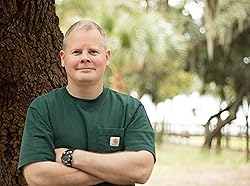
My friend Mark Boss has finally released the first three books of his new series, SUPERHEROES ALIENS ROBOTS ZOMBIES. If you like any one of those four subjects, you will devour these books. I have read them (during the editing/writing phase) and loved them. Each book comes with bonus materials, as well.

The story follows a boatload of vibrant characters, from Special Agent Kyle Kane, who first battles the zombies in a small town and eventually plays a major roll countering an alien invasion; Vigilant, the high-tech vigilante; Schroeder and Alvin, the sniper and his smartgun; Protor and his robot brethren; Hook, the singularity in human form, and his robot spider soldiers; and so many more!

<< The story starts with this volume, which is ONLY 99 CENTS for Kindle devices. (Disclaimer: Mark has included part of my THIS MORTAL FLESH novel as bonus material in this volume.)


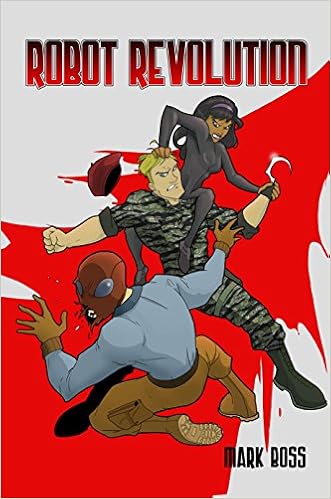
Cover by Jayson Kretzer
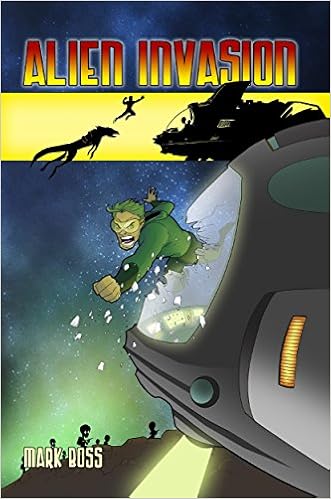
<< It continues with ROBOT REVOLUTION (which includes a short story about the character SCHROEDER), and comes to its interplanetary conclusion with ALIEN INVASION (which includes a behind-the-scenes essay about the origins of Mark's ideas, characters, and more).

Cover by Jayson Kretzer


You can find out more about Mark at these links:
>>His author website
>>His Twitter page
>>His blog site
>>His Goodreads page

Mark Boss at CreativeCon 2K15
Mark is a fellow member of the Coffeehouse Syndicate (a group of friends that get together once a week for lunch and conversation about movies, comics, TV, creativity and how we're going to take over the world), as well as The Cheshires writing group in Panama City. We also shared a table recently at Creative Con, where we shilled each other's work. I'm telling you all this for two reasons: 1) Transparency, and 2) I know what I'm talking about. Mark puts real thought and love into his work, which is fast-moving, hard-hitting, full of surprises and big ideas, as well as the smaller moments that make the action worthwhile.

Wednesday, August 19, 2015

Stories shared in the slipstream

Me, before the beginning.
PANAMA CITY — Writers and listeners and artists gathered Saturday at Floriopolis in St. Andrews for an evening of stories and conversations. Part of the gallery’s exhibit, “The Space Between Words,” the readings were offered by writers who had been recognized in a related short story contest.

The Space Between Words is an art exhibit, a “living” art project, a short story contest, and a fundraiser for Floriopolis. The individual words of Tallahassee writer D.A. Robin’s winning story are being sold as tattoos, so that the story will live and breathe on dozens of people who can construct their own meanings from the words and combinations of phrases. Tattoos, by artist Adam Whitehead at Panama Fox, are $25 per word.

Some families are getting tats of words together, so they can all be part of the story. Even punctuation is for sale, and one woman I know bought enough periods and dashes from Robin’s story to spell her husband’s name in Morse code.

Heather Parker, at right.
“That’s more emotion and personal connection to the story than I expected,” Heather told me in an email. “People have pretty deep reasons for getting tattoos — committing to permanent body art. ... Even I am having to stretch my perception of who gets body art, and we’re all probably guilty of stereotypes when it comes to art.”

As the gathering began, two young women dragged to the event by their mother amused themselves with the lighted zoetrope and drawing “spots” for the Art on the Spot project. A Tallahassee woman sat nearby, hand-writing a scary story she was entering in an anthology later the same evening. Kids on skateboards drifted past the big front windows, and visitors and guests mingled.

Gary, about to read.
Tallahassee made a good showing, with a large group in attendance to support their friends and contest honorees, which also included G.L. “Gary” Dearman and Amy Topol. Dearman started the event with his spirited reading of his tale — which he joked he had titled “The Space Between Words” to curry favor with the judges — about the secret source of infinite stories.

Other readers included Craig Bush of Fountain, who read the preface to his newest novel, “The Forever Effect”; Samantha Neeley, reading her contest entry, “Epilogue for a Corpse”; and me, reading an excerpt from my serial novel, “Giants in the Earth.”

D.A. Robin
Robin read a portion of his entry, “The Boy and His Beach.” The full text will not be released or performed until the end of the exhibit’s tattoo component, so as not to influence the meaning of the words still for sale. Topol brought the house down with her emotional reading of “Flashback,” which was recognized as a story of distinction in the contest.

After the readings, the Tallahassee group strolled to Gracie Rae’s for a sunset supper and party on the deck overlooking St. Andrew Bay.

Dearman said he was jealous that we had a place like Floriopolis, as Tallahassee has nothing to compare with its interactive community focus. He also educated me about “slipstream,” a term for fiction that uses the surreal or strange (sometimes sci-fi or supernatural elements in an everyday setting) to elicit cognitive dissonance; I joked that my non-fiction sometimes had that effect.

Amy Topol, bringing the room to tears.
At least, I meant it as a joke.


Peace.

Friday, August 14, 2015

Conjuring the ghosts of downtown PC

PANAMA CITY — The streets of downtown Panama City might get a bit spookier in October, as volunteers lead groups on foot through the alleys, thresholds and sidewalks on a tour of “haunted” locations.

I had some of Mat’s Good Coffee on a recent morning and sat in the CityArts gallery to talk with Beverly Nield and Paul Bonnette about the tour concept. It grew out of a Leadership Bay project to find a new way to draw foot traffic into the downtown area, they said.

“It should bring people here who will then eat and drink at the restaurants, or buy an antique at the shops,” Beverly said. “It’s just a spark, a start. We’re excited.”

Valerie Woods with the Downtown Improvement Board recently posted a call to actors, storytellers and writers on Facebook to promote the planning stage of the Haunted Walking Tour: “We are looking for volunteers to help us write the stories to be told on the tour, play the part of historic Panama City figures, lead the tours, and sell tickets on the nights of the event,” she said. “Since this is our first time doing this, we want to do it right!”

Volunteers will be needed at all locations along the tour, and some vintage costumes will also be required to complete the effect. Anyone with experience leading walking tours or with ideas to include on the tour are invited to call Valerie at 850-785-2554.

Valerie also confirmed the Panama City Jaycees will continue their traditional haunted house fundraiser at Panama City Marine Institute this October, and the Haunted Tour is not meant to compete with that: “This is more about telling fairly accurate historical and spooky stories about Downtown,” she said.

“When people leave the Jaycees, maybe they’ll want to keep the fun going by taking the tour, or maybe they’ll go from our tour to the Jaycees Haunted House,” Paul said.

Paul is also a member of the Panhandle Paranormal Investigation team, which has explored several of the buildings downtown. One of their upcoming investigations will take place at the Visual Arts Center building on Fourth Street. Paul is keen to share the team’s findings with tour groups — including ghostly voices captured on digital recording equipment.

“Of pretty much everywhere we’ve investigated in Bay County, downtown has the most (paranormal) activity,” Paul said.

The challenge is to tempt live visitors to frequent those same haunts.

Peace.


‘SAVE MY PLACE’ HONORED

ORLANDO — Panama City author Olivia DeBell Byrd was honored last week at the Florida Publishers Association President Awards in Orlando. Her debut novel, “Save My Place,” won the gold medal in both of the categories it had been entered: Florida Fiction for Adults and Cover Design.

“Save My Place” is a love story set in the South during the 1960s and ’70s, against the backdrop of the Vietnam war. A passionate and unconditional love must confront a painful past, heart-searing separation, and the greatest of all tragedies.

For more information on the association and awards, visit FloridaPublishersAssociation.com. For more on “Save My Place,” visit OliviaDeBellebyrd.com.

Thursday, July 30, 2015

Con founder opening new horizons

Jayson and son at a signing event.
PANAMA CITY — I grabbed a coffee with JaysonKretzer, graphic artist and founder of Panama City Creative Con, last week to catch up on his efforts to finalize the event.

I’ve known Jayson for a while. I know he likes superhero stories with at least a hint of sunshine in them. Heroes who want to be heroes, who fight for a better world and believe that’s an achievable goal.

Turns out, that’s kind of what he’s all about. He started CreativeCon to give youngsters an opportunity he missed as a child — to be exposed to creative career paths and meet potential mentors, while celebrating the imagination.

“From the time I was a pre-teen and received my first comic book, I was intrigued by art,” Jayson said in a letter to art teachers that he circulated to promote the event. “That’s also when I figured out I was a visual learner.”

But he had no idea how to pursue art as a career. Growing up in the Northwest Florida Panhandle, he never had the opportunity to meet artists in his chosen field or even learn about educational opportunities to enter creative fields.

Finally, at age 25, he attended a comic convention, where he met many industry professionals face-to-face who helped put him on the right track. Now, for more than 15 years, Jayson has worked from home doing freelance illustration, graphic arts and website design. His work also includes sketch cards created for Marvel- and Cartoon Network-licensed products and two self-published books. In addition, he teaches drawing classes in schools and other venues.

Twenty years after he graduated from high school, comic book movies dominate the big screen while graphic novels are moving into classrooms as a learning tool. Between those very visible media, plus the growing popularity of web comics and cinematic video games, Jayson has seen “a renewed interest in sequential art.”

Seeing all that developing on the horizon, Jayson wanted to give children and teens the chance he didn’t have until adulthood; he wanted to establish a convention that would inspire them to be lifelong creators.

“The goal of Creative Con is three-fold,” Kretzer said. “One: To give young people in our area access to mentors in the field they are interested in. Two: To show K-12 students educational opportunities in our area that will help them fulfill their dreams. And three: To provide children with the tools they need to succeed — staying right here.”

Even here in the Panhandle, where it seems like the 21st century is still just getting a foothold, you can make a go of it in creative fields. And you can help others follow their dreams as well.


Peace.

Monday, June 08, 2015

Fiction Fest Photo Blog

Here are some photos from Fiction Fest @  Friday Fest, which took place at Books By The Sea on June 5:
A good turnout for 8 (or 9?) local authors.

Jayson Kretzer
Carole Allen Bailey


Janeen O'Kerry
Jack Saunders
Shannon, sitting in for author
Chuck Barrett (who had a signing in PC the next daybought my latest novel.
Chuck with Ruth, left, and Carole


Chuck, Ruth, Carole & Debi Barrett

Hal, left, and Milinda Jay Stephenson with Wayne Garrett


Friday, June 05, 2015

PC native ‘Blown’ home for book launch

‘BLOWN’ BOOK SIGNING
When: 4-7 p.m. Saturday, June 6
Where: Twisted Brew Coffee House, 103 W. 23rd St., Suite E7, Panama City
What: Author Chuck Barrett will be on hand to sign books and discuss writing his latest thriller novel featuring Agent Gregg Kaplan, “Blown” (Switchback Press, 337 pages, $16.95)

PANAMA CITY — Lofted on the winds of indie publishing success, author Chuck Barrett returns to his old stomping grounds this weekend to celebrate the launch of his latest thriller novel, “Blown.”

Barrett will be at Twisted Brew Coffee House, 103 W. 23rd St., 4-7 p.m. Saturday, and will speak briefly about how the particular characters in “Blown” came to be and which real-life persons were inspirations or became characters in the book.

Chuck Barrett
“This is a much larger scale publicity push than I have ever done in the past and is designed to hopefully enlighten a lot of readers that many indie authors can and do produce stories just as good or better than those select few traditionally published powerhouses,” Barrett said. “Always the same names on the New York Times bestseller list!”

“Blown” marks the beginning of a new series focusing on protagonist Gregg Kaplan, who appeared as a supporting character in Barrett’s first two novels, “The Savannah Project” and “The Toymaker.” 

He said this book was a case of a character demanding a story.

“While writing ‘The Savannah Project,’ I realized I wanted to have a Gregg Kaplan series as well as a Jake Pendleton series,” Barrett said. “Their styles are drastically different, so it is fun changing things up. The idea for the story is about two years old and seemed appropriate for Kaplan’s rough and tumble style.”

No ordinary man, Kaplan has special skills, courtesy of the U.S. government. Assigned to stay off the grid, he innocently stumbles into a blown witness protection detail in Little Rock, Ark., and can’t walk away from the impending mayhem. After the dust settles, a mortally wounded Deputy U.S. Marshal makes Kaplan promise to personally deliver the witness to a safe site.

“Not just a promise, an oath,” Barrett said in describing the plot. “A pledge between ex-Army Delta Force comrades. A trust that could not be broken — once in, never out.”

Though he has lived in Fernandina Beach for 30 years, Barrett grew up in Panama City, living mostly in the Cove neighborhood, but then on State Avenue during high School. He attended Jinks Middle School and Bay High School before transferring to Mosley High. His parents still live in Lynn Haven.

“I graduated from Mosley in 1975 — first graduating class from the then-brand new school,” he said. “So technically, I went to Bay High for 10th grade and Mosley for 11th and 12th since there was no Mosley when I was in 10th grade.”

A retired air traffic controller, Barrett is a frequent visitor back to Bay County, and recently has been a featured author at the annual BooksAlive festival sponsored by the Bay County Public Library. He also conducts seminars on the art of self-publishing based on his book, “Publishing Unchained: An Off-Beat Guide To Independent Publishing.”

Barrett’s novel “Breach of Power” won the 2013 Indie Excellence Award in Political Thrillers, and was a finalist in the 2013 International Book Awards Thriller/Adventure category. “The Toymaker” was a finalist in the 2013 International Book Awards Thriller/Adventure and Mystery/Suspense categories.


“Don’t worry, the Jake Pendleton series is still alive,” Barrett assured fans. “The book after ‘Blown’ is another Jake Pendleton book. The plan is to alternate series for a while. Jake will return in 2016.”