Showing posts with label storytelling. Show all posts

Tuesday, October 27, 2015

Behind the Writing (Part 3): Refilling the Creative Well

The following is the last in a three-part series about the craft of writing, specifically characters and situations, why we write stories, and how to refill the creative well. These conversations took place in early October 2015 with author Mark Boss and myself.

>>Click here to read the first installment<<
>>Or here to read the second one<<

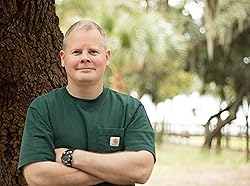
Mark Boss, our friend Carole, and me at Books Alive 2015.

Mark: One last thought. I’ve been thinking about this one a lot lately. I’m convinced — you’re torn so many different ways. You’re expected to blog, you’re expected to tweet and Facebook and all these different things. But every time you do that during the day, I think you use up a little bit of creative energy. Maybe not a lot, but a little bit. And then you have to wonder, is there any left over when you actually go to write? So my question is not whether that’s worthwhile or not — because it’s probably necessary — but rather, how do you refill the well after you’re tapped out, after a long week or a month, or even when you finish a long project? Because with a book, you might be committing to a year or two’s worth or work.

Tony: And that last push leaves you with the thousand-yard stare.

Mark: And by the end, you’re a zombie. How to you refill the well? What goes into that to bring the water level back up? ... I find that I do a flurry a reading as soon as I’m done (writing) a book. All the stuff that’s been piling up on the Kindle or in stacks, and not just fiction, a lot of non-fiction. When I’m working, I might be reading about 50/50. But afterward, man, I’ve got to fill my brain back up. There’s wanting to catch up on all the TV shows you missed and all the movies you didn’t see. So, for like a month, I go nuts. But then, pretty soon, there’s that itch like, man, I’ve got to write something. You can’t wait until you feel full again to start writing.

Tony: For me, there’s a couple of things. One is, I give myself permission not to be obsessed or upset that I’m not writing. I didn’t always do that. I don’t really do a lot of reading while I’m in the middle of a project. I’ll read a comic book, or magazine articles, watch TV for an hour or two — during the writing process. After the writing, I want to go somewhere.
Mark: A change of scenery, literally, to refresh the brain.

Tony: Clear the palate, yeah, and I think that’s why going up to visit Birmingham even jumpstarted that (steampunk novel) idea. I was in the middle of a project, and it was driving me crazy trying to finish it so I could start the new one. I was writing notes on one and working on the other. That’s one thing I do, even if it’s just taking a day, me and my wife going to Apalachicola (about a 90-minute drive from home) and walking around. Just something to change the surroundings for a few hours and get your head out of the space it’s been in.

Mark: Get away from the computer. Plus, you bring up the point: Even though you have anew idea in your head, the discipline — the part that’s the difference between being a professional and not — is that you finish the project you’re on. And then you start the next one. You don’t get distracted and start something else. It’s a small point, but important for other writers out there, and readers.

Tony: Yeah, there’s really only two rules: (/Holds up one finger/) Sit your ass in the chair and write. (/Holds up second finger/) Finish what you start. Even if that means just getting to a stopping point. I spent too many years dropping a project and starting something new, just to drop that too.

Mark: I think that happens a lot.

Tony: Somebody said it’s like being in love. You’re committed to this project, and all of a sudden you see this nice shiny new idea over there. And you’re like, this project is just not as pretty as I thought she was. She makes me work too hard. But this idea is exciting. I think I’ll go play with this one a while.

Mark: I think it’s fear. I think people fear finishing. When you’re done, the dream is over. Now it’s time to let go. I really do think fear plays a big part in that. It’s easier to tinker than to finish.

Tony: Today, that fear goes even further. I can submit to all these (traditional publishers) and if they say no, then in the old days that was the end of the story. Now you can publish yourself so fairly easily that you don’t have any excuse to keep it hidden away in a drawer.

Mark: You can’t say, “Well, they kept me out. I never got my shot. I never had a chance.” Now, your baby has to get out there and compete, and it might get beat up on the playground. Those are my deep thoughts I had recently.

Tony: I appreciate it, because I had no deep thoughts to bring to the table.

Mark: You’re good at spontaneous deep thinking.

Tony: Or bullshitting.

Mark: It’s a craft.

Tony: It can be learned.

>>Check out Mark’s stories, available in ebook and paperback at Amazon.<<

Tuesday, October 20, 2015

Behind the Writing (Part 2): Why do we write?

The following is the second in a three-part series about the craft of writing, specifically characters and situations, why we write stories, and how to refill the creative well. These conversations took place in early October 2015 with author Mark Boss and myself.

>>Click here to read the first installment.<<

Mark Boss
Mark: That brings me to my second question: What is it in us that demands that storytelling? I think you go to your caveman, and other people (with him) like stories but there’s probably only one person in the tribe or village that’s a storyteller, and he’s probably a shaman or he’s painting on the walls — “Oh, that was the best hunt ever!” (The number of storytellers is) probably a bigger percentage of the population now because the tools are available to write, but telling stories has always (come from) a small part of the population. I think it only feels big now because there’s so many people publishing. Why is it a small part, and why are people like us driven to tell stories?

Tony: If you strip all the publishing away from it and get down to storytelling, I think everybody tells stories. Every conversation we have with our loved ones, we’re telling stories. If my Mom calls and tells me about an uncle that’s not doing well, she’s storytelling. As a people, a species, we developed language and writing — well, in part to keep track of what we were telling —

Mark: To give it permanence, because we wanted to give stories multi-generations.

Tony: But in those days, and up until recently, most people couldn’t read and write, but everybody would go down to the square to hear the town crier tell what happened in the court, or gather around their radio to listen to serials.

Mark: My grandfather told stories on the porch, and neighbors would come over to listen.

Tony: When it comes to writing, I think the difference between most people and people like you and me is the difference between a child drawing a picture with crayons and the artist painting a landscape or portrait. We found something in us that felt fulfilled and we were drawn further to continue filling that empty hole in our hearts.

Mark: You’re so driven, you spend years learning the technical skills, just like a painter. You take it way beyond what most people would do because you spent all these years developing it. If everyone else did that, you’d have a lot more people who were writers. They’d end up at the same place.

Tony: It is a craft, and it can be taught. It can be learned. Those of us who felt drawn to it also had to learn it —

Mark: Over a long period of time —

Tony: With a lot of trial and error. … If I turn away from it for too long, as you do from time to time, I actually feel heartsick, like there’s something missing. That ‘something’ is telling those stories. At least, for me it is.

Mark: Sometimes it’s the only way I can cheer myself up. If I sit down and start writing, within an hour or two I’m smiling and happy again. It’s unreal. It’s weird how sometimes you purposely turn away from it, then you think, “What the heck was I thinking? Why am I not doing that?”

Tony: What are we hoping to do is to write something that’s going to affect somebody. That they’re going to carry with them, share with other people, and it’s going to make their world a better world, and it’s going to go on beyond you, after you’re long gone. Or, we could just be writing stories to have fun with. If we’re lucky, we’ll be like H. Rider Haggard and a hundred years after we’re gone people will still be making movies out of our stories.

In the next post, we’ll talk about how writers and readers can refill the creative well.

>>Check out Mark’s stories, available in ebook and paperback at Amazon.<<

Tuesday, October 13, 2015

Behind the Writing: PART 1: Characters or Situations?

The following is the first in a three-part series about the craft of writing, specifically characters and situations, why we write stories, and how to refill the creative well. These conversations took place in early October 2015 with author Mark Boss and myself.

Mark Boss at PC Creative Con 2K15
Mark: We were talking the other day about characters. You read Stephen King’s “On Writing,” and he says he always starts with a situation; I started thinking, how predominant is that? How many authors start with a situation versus starting with a character? When you told me about your Alabama trip, it seemed like the seed of it, the germ was the character first. What triggered that idea, and then did you build the situation around that character?

Tony: I think that story came out of inundating — immersing myself in a bunch of unrelated ideas. I’m in Birmingham, and there’s a lot of stuff about the Confederacy, it’s an iron town — that whole blacksmithy, iron works, steam era feel to it. And I’m reading a lot of steampunk. All of those things fed into the mulcher, and then, driving home, seeing those old Southern city names —

Mark: Specifically, Jemison and Thorsby. Were they in that order?

Tony: Yes.

Mark: Because you might not have thought of it (if they were in the reverse order).

Tony: Right. That came from character first, from a mixture of the names and a time period I had floating around in my head. So in a way, the situation was kind of already there. I was primed to find a story that was steeped in the Old South.

Mark: Which is quite a departure, because I’d say most steampunk, maybe 90 percent of it, is Victorian England. At best, they cross the Channel to France. So Steampunk-USA is a departure.

Tony: With my Caliban stories, it definitely came out of character first. I was 14 years old and wanted to write Doctor Strange. Before I knew it, I wasn’t writing about the wizard, I was writing about the kid he trained and the development of his potential as a magic-user. Over the years, both of those characters kind of developed in the back of my head. — So, how about you, Mark? Character or situation?

Mark:  Looking at the last few books, I realize I’m going more ‘situation.’ My thing was a “what-if.” What if all these bad things happened at the same time? I love zombie things, and zombies were very big at the time. And yet I thought, okay, what if we ramped it up? Because one apocalypse is not enough for me. That’s just too slow. I want to see us get devastated. So you throw in aliens — the classic thing of alien invasion — and then you throw in a robot uprising, and then we’re starting to get it boiling. We’ve brought it up to temperature. Then I started thinking, everyone is going to be caught in this, but we don’t want to follow the people who just sit in their basement and wait for it to stop. We want to follow people out there actually doing things. The books jump around a fair amount to different characters. Even so, I tried to focus on the excitement: Let’s go look for the most important things happening or the most fun things happening. That was more a situation thing, but I had never thought hard about it until recently.

In the next post, we’ll address the question: Why do we make up stories?

Check out Mark's blog "Chimp With Pencil"<<
Mark's website<<
and his Amazon author page<<

Friday, September 11, 2015

Visiting author shares secrets of story


Kathy Bennett, me, & Lisa Wingate
PANAMA CITY — Most of Lisa Wingate’s novels develop as she discovers an untold story that piques her imagination. Her new novel, “The Sea Keeper’s Daughters,” began with a tale related by a reader.

“A woman was traveling with her father, driving through the mountains of Appalachia, and she saw these doorways in the sides of the mountains,” Lisa said. “He told her that, during the Depression when families would lose their farms, they would move into the caves and scrap the house for doors and other things to outfit the caves.”

Intrigued, Lisa started looking for documentation about the anecdote, but she found something else instead: The Federal Writers Project, an all but forgotten Depression-era program in which some 5,600 people produced 300,000 documents — millions of pages of poetry, essays, novels and journalism.

Created in 1935 as part of the U.S. Work Progress Administration, the project provided employment for historians, teachers, writers, librarians and other white-collar workers. The original purpose was to produce a series of sectional guide books focusing on the nation’s scenic, historical, cultural and economic resources.

However, most of it was filed away in vaults during the Red Scare, and stayed there for 80 years. Recently, the Library of Congress began putting the documents online. (Link to the documents here<<)

“There’s an unpublished play by Zora Neale Hurston, slave narratives — I could read them all day,” Lisa said. “I’ve been to school, you know, been in the business a long time — this is my 25th novel — and I had never heard of it. It’s sort of sad. ... It’s amazing to me all of this exists and no one knows about it.”

According to her online bio at LisaWingate.com, Lisa was inspired to become a writer by a first-grade teacher who said she expected to see Lisa’s name in a magazine one day. She also entertained childhood dreams of being an Olympic gymnast and winning the National Finals Rodeo “but was stalled by a mental block against backflips on the balance beam and by parents who stubbornly refused to finance a rodeo career.”

A born storyteller, Lisa equated the hidden stories of Depression-era America to the untold tales of families. It’s an important link to her, as her first novel was inspired by life stories her grandmother told. The tales changed her opinion of her grandmother, who she had regarded as a hard-edged woman.

“Sometimes there are things you don’t like about someone, but it’s because you don’t understand where they’re coming from,” Lisa said. “Ordinary stories can teach you, inform your life.”

That first mainstream novel, “Tending Roses,” is still in print after 15 years, and Lisa still hears from readers who were inspired by it. Most of them tell her they wish they had gotten their grandparents to open up and tell their stories. That’s why she shares “ice-breaking” techniques when she meets with readers, such as her visits this week to the St. Andrews Coffee House & Bistro on Tuesday and the Blountstown Library on Wednesday.

(You can also find a great list of story catalysts and interview techniques at her website under the heading “Storytelling forFamilies.”)

“People get intimidated. There needs to be a catalyst to get the stories flowing,” she said. “I worry sometimes where the next storytellers will come from.”

Probably, they will be inspired by storytellers like her.


Peace.

Wednesday, March 25, 2015

Writing Caliban: New ideas come from creative research

(I've decided to do a regular bit here in which I'll give you a look at my writing process. We start with a chapter in the second Caliban Cycle novel, which I'm currently working on. Don't panic: You didn't miss the first Caliban Cycle novel. It hasn't been published yet.)

I had in mind a scene that would take place in a vampire bar in London, as one of my characters seeks a "ground level" informant that might have a lead for him. I thought I might call the bar The London Underground.

So before I started writing the scene, I hit up Google for some info on the actual London "Tube" system, learning about its age and some of the travails of its construction — and it struck me that it would have been almost infinitely easier in the 1860s to build an elevated railway over existing roads and between low-rise buildings than to tunnel underneath those roads and buildings. Workers had to remove tons of earth (without causing sinkholes, cave-ins and the collapse of structures above), shore up walls of clay, pump out ground water, pump in fresh air, electricity and heat, build platforms and so forth — most of which would not be necessary if building an El train.

Conclusion: Subways were invented by vampires for the express purpose of allowing them to travel anywhere in the city without exposing themselves to the sun. Who but a vampire would think underground travel is preferable to open air travel? That led me to the next idea...

If subways are actually for the benefit of vampires living in the cities, then their bars and hangouts would be accessible through these same tunnels. That meant I could place my vampire bar along the Underground route; but now I didn't want to call the bar by the same name.

Ramses 2 and Tekhit
What emblem or name would be appropriate for a vamp nightclub? I wanted to avoid ones I'd seen or heard in movies or books or comics. I didn't want something obvious or cliche. It occurred to me that beer was at least as old as one of the characters in this story — the Egyptians fed it to their slaves to keep them mollified — so I looked for a heiroglyph that represented beer or partying. I found Tekhit.

Tekhit, according to this source, is the Egyptian goddess of beer. Her name translates as both "drunkeness" and "slaughter" — and what creature would equate slaughter with drunkeness more than a blood-drinker?

So bar would be called Tekhit, and her heiroglyph would be its emblem. More so, I decided there's a Tekhit club in every major city; it's a franchise; it's the Hard Rock Cafe of vampire clubs. Thus, my characters would be meeting at Tekhit London, sampling vintage 1972 harvested from a willing donor.

Also, what good is a bar scene without a fight? They'd do that too.
...And so it goes.

Thursday, September 11, 2014

Local author saves a place for readers

PANAMA CITY — Olivia DeBelle Byrd is a storyteller, part of a Southern tradition that begins with tales of family told and retold at gatherings, and continues with made-up tales that are at least partly true. Sometimes, both sorts of stories happen all at once.

Olivia’s first book, “Miss Hildreth Wore Brown,” was a collection of family anecdotes and essays. It won the Silver Medal in the 2011 Florida Publishers Association President’s Book Awards.

“I was  raised by a Southern father and grandmother of uncommon wit,” Olivia said, discussing the book. “The fabric of my childhood was laced with humor. I have loved the art of storytelling as long as I can remember, so when I was encouraged to write these stories down they poured forth as though an age-old tap had been discovered and turned on.”

Her second book, a novel called “Save My Place,” is being published this month by Mercer University Press. It’s the story of Elisabeth Sterling, a young woman growing up in the South during the turbulent 1960s, and the evolution of a marriage as she meets, weds and maintains a relationship with her beloved Kincaid Patterson.

“It is set in the 1960s and ’70s as that was my ‘coming of age’ — high school, college, marriage, children,” Olivia said. “I have wonderful memories of those days and it was a lot of fun to write about it. Baby boomers will relate to the pop culture of movies, music, books, TV shows, the way we dressed, the difference in social and sexual mores.

Olivia DeBelle Byrd
Olivia, better known locally by her married name “Cooley,” is a third-generation Panama City native with a penchant for turning ordinary happenings into compelling tales. She will celebrate the new novel’s release in the coming weeks with a series of events (see the accompanying info box for details).

Crucial to “Save My Place” is “a passionate and unconditional love” between Elisabeth and Kincaid that has to confront a painful past, heart-searing separation and the greatest of all tragedies, but the biggest obstacle is the loss of faith that threatens to undermine all that they have.

It isn’t all gloom, though. Upon meeting Elisabeth, Kincaid exclaims, “You strike me as a very entertaining person.” And it is that ability to find humor and joy amid sorrows, such as Kincaid’s deployment to fight in the Vietnam War, that carries them — and the reader — through seemingly unbearable situations.

“The Vietnam War was a very impressionable and pivotal time for my generation,” Olivia said. “I was in college during the middle of the war when the U.S. had the highest number of troops deployed. A lottery was held for the draft in December 1969, several years before the draft ended in 1973. That made an impression on me.”

Elisabeth is a realist. She would prefer to abide in Peter Pan’s Neverland and has a “magic door inside ... that kept all the ills of the world at bay,” but that door comes ajar when their child is diagnosed with leukemia.

“Elisabeth grew up in very similar circumstances as I did, so many of her experiences are similar to mine growing up,” Olivia said. “One of the main story lines was inspired by a friend of mine who went through a very similar experience and shared it with me in a beautiful way.”


Peace.
---
‘Save My Place’ Events
  • Book signing 10 a.m. to noon Saturday, Sept. 13, at The Hidden Lantern bookstore, 84 N. Barrett Square in Rosemary Beach; (850) 231-0091
  • Official book launch reception 5-7 p.m. Tuesday, Sept. 16, at the Visual Arts Center of Northwest Florida, 19 E. Fourth St. in Panama City; 769-4451
  • Luncheon and inspirational talk 10:30 a.m. Oct. 7, at First United Methodist Church Community Life Center, 903 E. Fourth St. in Panama City; tickets are $15 and may be reserved by calling 763-6537
  • Details: OliviaDeBelleByrd.com

---

Tuesday, June 17, 2014

Blog Hop!

My friend Windy of the HouseBlend blog tagged me to play along in a "blog hop" Q&A. The Rules: Answer the following questions, then tag someone else (or someones elses; up to 5). I shall endeavor to play by the rules.

What am I currently working on?

Besides my day job, and the house that needs painting (etc.), I'm working on a novel about a sentient zombie. I have two notebooks full of notes, scenes, character sketches for a steampunk novel set in an alternate post-Civil War America, and another novel that is a sequel to my most recent manuscript (Caliban: Giants in the Earth, which made the quarter-finals of this year's Amazon Breakthrough Novel contest, but did not make the semi-finals, alas). My answers below will relate to my fiction writing, not my reporting or columns.

How do I write?

After years of working just in the digital realm, I have returned to writing longhand in unlined journals with a pen for my first draft. Then putting it all together and editing as I go with a keyboard. I tend to write with the keyboard late at night; I make notes, sketch scenes, etc., whenever the idea hits me throughout the day. (I try to keep my notebook handy.)

How does my work differ from others of its genre?

OOof. That's the most difficult question on this list. I like to think my stories have unique approaches stylistically as well as a willingness to be unblinkingly honest about everything, from a character's spirituality to a description of a violent act. Caliban, for instance, is a multi-generational Southern Gothic/Lovecraftian horror/fantasy. My steampunk novel will explore a Native American response to Euro-American expansionism, among other topics.

Why do I write what I write?

Because I can't stop it. I can't take a weekend trip with my wife without coming up with crazy story ideas. I hear a song and stories form in my head. I  see a movie and think how I would have done the story instead. I overhear a conversation at a coffee shop, and imagine the backstory. These things go into text so I can see what I'm thinking, and so I can revise and clarify them, and maybe make somebody feel something real. So few people ever read what I write, that I don't write for them at all.

How does my writing process work?

Like I said, I write down ideas, characters, scenes, questions, notes all the time. I will sometimes write a brief outline to help me recall my thoughts later, but when I sit down to the actual work, those outlines mean nothing. I color outside the lines until I find my way through. I try not to revise as I go, but keep moving forward to the end. I take chapters to my writers' group to get their edits and suggestions, then dive in to revise.

Who wants to play along?

Let me tag Mark Boss, author of One Bullet, and Milinda Jay, author of Her Roman Protector.

Tuesday, June 10, 2014

Writers on Writing: My Approach

Milinda Jay (from GoodReads)
(NOTE: My friend Milinda Jay, whose novel "Her Roman Protector" was published by the Harlequin Love Inspired imprint this spring, has been running a series called "Writers on Writing" on her blog. It focuses on the Love Inspired writers, but she invited some others to play along (including me). These are my answers to her questions about my approach.)

1.What time of the day do you write best and why?

My day job is writing for a newspaper and destination website, so I’m writing, interviewing and editing all day. But I have found that I’m most creative after noon; I tend to write my more personal columns later in the day. I’ve always been a night owl, however, when it comes to fiction. That’s what I did as a teenager and college student, either writing into the wee hours or waking with an idea and writing in the middle of the night. As a young father, I found that I could only have uninterrupted writing time after the kids (and usually, the wife as well) were in bed, so I would work into the night, getting a few hours of sleep, then getting up to help get the kids ready for school and heading to the day job. Now, with the kids grown, I still do most of my creative writing late at night. I don’t know if it’s connected to my own weird biorhythms, or if it’s something I’ve trained myself to do over the years, or if it has anything to do with that contract I signed in my own blood, but all my best work has corresponded to the witching hour.

2.How long do you write every day when you have a deadline looming?

I live with deadlines at work, and they have a way of cutting through the bullshit. You write what needs to be told, without embellishment, when you’re on deadline. It makes for lean prose. In my fiction, at least so far, all my deadlines have been self-imposed.

3.How long do you write every day when you don't have a deadline looming and why?

I’m going to give an answer related to my night-time activities: about two hours, give or take. Some nights I’m surprised to see how late (or rather, early) it is, because I’ve been in the trance state that a good night of writing induces. Some nights are a hard slog for every word. And some nights I have to say ‘screw this’ and go to bed at a decent hour.

4.How do you begin writing a novel?

The short answer: I have no idea.

My first published novel, Welcome to the Dawning of a New Century, started with a short story idea about a meat cutter married to a Vegan. It was more of a concept about ridiculous situations that grew as I came up with more characters. My second published  novel, The Book of Gabriel, evolved out of a set of dreams over the span of several years that I mined during a daily writing regimen I had created for myself in 2008. My third novel (really, a novella), Dragon Rising, was an attempt to write a space opera for my kids, who were at the time ages 10 and 13, something we could share. My current novel project, This Mortal Flesh, also began with a dream (a disturbing one) that made me want to explore the mindset of a sociopathic homicidal narrator. And my manuscript that’s currently in the Amazon Breakthrough Novel contest is the result of a childish power fantasy story that evolved over thirty years until I was mature enough and had enough words behind me that I could tackle it.

Each one of these began in a different way. I have copious notes and scenes written for a new project that started during a long drive, after the names of towns we passed suggested the names of characters, and I asked myself who these characters might be.

5. Are you a before you ever write your novel planner? If so, how do you plan? Do you use any outlines, books, formats when you plan your novel?

The only novel I have ever outlined in advance was This Mortal Flesh, and I have fallen so far off that outline it’s ridiculous. However, I often write outlines during the process, to help shape the major beats of the plot. Going back over these notes, I’ll often argue with my earlier decisions and make new notes. Then, as I’m writing, I ignore the outline, just sort of finding my way through a vague idea of the landscape.

6.If you aren't a planner, is there a point in writing the novel that you stop, look back and plan? If so, what is your method for doing so?

See above. I will do read-throughs to make sure details match up from chapter to chapter, or to plant the seeds of a plot device, a clue, or create a repeating image from something I came up with in a late chapter. That way, it looks like I always meant to do that. Also, I will never admit to that. You can’t prove it.

7.Where  did the idea come from for the novel you are working on right now?

I awoke in the middle of the night from a nightmare. I had dreamed that I was a flesh-eating zombie, that I had become aware of what I was, and that all the other zombies around me in the ruined city were still mindless. I knew what I had to do to survive (i.e., kill and eat live people), and in my dream I decided that I could do this. In fact, I was okay with this. That’s when I awoke. Did you ever wake from a sad dream and feel like crying? Did you ever wake yourself up laughing at something you dreamed was funny? I awoke with the disturbing realization, convinced at least until the dream had faded and I fully awoke, that I could kill if I had to. What kind of person did that make me? The kind I wanted to explore as a main character.

8.Do you use any visuals for inspiration? (or anything else!)

Not consciously. I have been looking at lots of steampunk items online to fuel a new project’s early conception, but I tend to avoid looking at, reading, or watching TV or movies about the sort of thing I’m currently writing. It makes me feel like it’s been done before, which of course it probably has, but that’s just death to momentum.

9. How do you get through the "murky middle" of your novel?

That part is almost desperately painful. I’m struggling with it right now. I skipped the “muddle” and went on to write the ending chapters, so now that middle ground is all bridge work, but you still have to keep it active, with obstacles and injuries and so forth. Sheer force of will. Stubbornness. Self flagellation.

10.Do you revise every day? If so, how do you organize your revising? What is your revision technique?

I do not revise daily. Going back kills momentum. I do, however back up and re-read previous segments to get me back in the rhythms of the work, remind me where I have been recently. I try to revise as I get notes from my writers group, then do a read-through to note places that are clunky or need more attention, then do another read through to strengthen verbs, increase the specificity of my language, and so forth.

11.If you don't revise every day, when do you revise and why?

See above.

12.Do you have a writing group, or a trusted reader for your novels? If so, how does that work? Do you meet weekly, or only when you have a novel due? Do you share your materials online or in person?

Yes. I’m part of a group that meets twice a month. We email each other almost daily about some aspect of our lives and work, but we send each other chapters when it’s meeting week. We each make notes on each other’s chapters, and review them in the meeting. Some prefer using printouts, and others forward their notes via email.

13. What have you learned about your method of writing after publishing your book(s)? Has it changed? If so, how?

I have tried to experiment with my approaches to fiction throughout my adult life. What I’ve learned is that your approach is only as effective as your ability. Find what works for you to get those words on paper (or screen). Don’t get hung up on how you plan to do it. Just do it.

14. What advice about a writing method would you give to any new writer?

See above.

15. Is there anything you would like to add about writing?

Our mutual friend Mark says it irks him when someone moans about how they hate writing but love having written (as Dorothy Parker famously said). He says he loves the act itself. I can understand what he means, but I guess I have more pain in the process than he experiences. It is difficult. It is work. Some nights, when it feels like your imaginary world is coming together, it is joyous. When that scene works perfectly, it is bliss. When the ideas are coming fast and freely, it is delicious. But making it make sense to the reader is a job. It can hurt. (My back is killing me right now, for instance.) It will drive you crazy.

In a discussion from lunch recently, I compared writing a novel to a love affair. (I’ve never experienced this sort of thing in my love life, but I read a lot. I believe it is true.) I said my problem with working on a novel is that, once I get past those first heady chapters and am facing the weight of time, I suddenly have an idea for another novel. It’s fresh and new, exciting, sexy – but here I am, stuck in a long-term relationship with the current story. I’ll find myself sneaking off to make notes on the new idea, doing research that won’t help me in the current work at all, basically courting the new idea while still trying to keep the faith with the “old” one. I get mad at the current work, standing between me and my heart’s newest desire. In the past, I’ve even let myself abandon the old work for the new one.

My advice: Finish what you start. The new idea will still be there, waiting, maturing, ready to be set in type when the time is ripe.

Peace.


Thursday, May 15, 2014

Boss debuts new thriller, ‘One Bullet’

Cover Art
PANAMA CITY — The only criminal other criminals trust with their money is the bagman, and bagman Joe Barrow never lost a delivery until a mysterious killer left him for dead and escaped with the cash.

Now Joe and his girlfriend, Carly, must find the money before the Cartel, the cops, or his own Syndicate finds them. Carly owns his heart, and Joe will do anything to protect her. He should run, but he’s determined to expose whoever betrayed him and deliver the cash.

One bullet at a time.

That’s the situation in “One Bullet,” the new crime thriller from Panama City author Mark Boss. Set in Panama City, Rosemary Beach and other locations across the Emerald Coast, “One Bullet” tracks its characters from one extreme situation to another in a driving narrative full of violence and dark humor.

In many cases, Mark said, it’s only when people face that kind of situation that you see them for who they really are. That’s why he delighted in throwing obstacles, injuries and betrayals at Joe Barrow as “One Bullet” progressed.

“Early detective characters were cowboys in a city. There’s always a girl — there’s not a plot without a girl — there’s always a bad guy, a McGuffin (or plot device), a bag of cash or a case of jewels,” he said. “It’s a collision of people that are doomed in the same way characters in Greek and Norse myths are doomed, falling forward into the plot. They can’t help themselves.”

Mark’s previous books include the thrillers “Hired Guns” and “The Cultist,” and the urban fantasies “Dead Girl” and “Dead Girl 2: Fader Boy.” He’s a member of the Panama City Writers Association and The Cheshires writing group. His website is MarkBoss.net, and he blogs at ChimpWithPencil.com. >>This is his Amazon profile<<

Mark began writing pulp-style thrillers for a website called “Beat to a Pulp,” and an early version of “One Bullet” was produced for this site. However, he credits PCWA member Wayne Garrett with questioning a portion of the story that got him thinking of it in deeper terms.

“He got the hamster wheel turning,” Mark said, which led to research into things like money laundering and hacking. As is usual for novelists, most of the research is never seen in the book but serves to inform the writer’s approach.

Mark makes his living as an editor-for-hire, freelancing for novelists, tech companies, non-fiction authors, academics and more. His short fiction has been published in “Between There” Volume 2, “Meow,” “50-to-1,” “Blazing Adventures,” “The Dead Mule School of Southern Literature,” and the Emerald Coast Review.

“Editing pays the bills, and writing keeps me off of rooftops and out of sanitariums,” he said. “Anybody going into writing for the money is crazy or at least misinformed.”

Mark’s family came to Panama City in 1969, when he was a wee tyke. He considers himself a native. His first written works were comic books he illustrated in spiral notebooks, though he started reading epic novels like “The Hobbit” at an early age.

“Comics were friendly. They were short in pages, but epic in storytelling,” he said on his Amazon.com biographical note. “The point is that when I wrote/drew the last page, I had told a story.”

He soon began emulating Edgar Rice Burroughs and other authors he admired. He wrote his first (self-described “horrible”) novel during college in the mid-1980s, under the influence of Douglas Adams.

“When I was young, I went through a phase of reading Dashiell Hammett and Raymond Chandler,” he said. “The people in those books were so real to me — people who made terrible mistakes, but that’s real. The things that drove them were relatable to me.”

Post-modern storytelling, full of anti-heroes or a collection of debased characters, is not something that appeals to Mark, who said he needs someone in a story that he can pull for.

“They may be knuckleheads or killers, but at least they’re attempting to do the right thing,” he said. “The heart of every great story is good versus evil, the moral conflict. A story mines that, or it’s just a newscast.”

Mark said he’s fascinated by characters who make all the wrong decisions for all the right reasons, like those who throw caution to the wind for the sake of love: “That trumps everything. Love trumps reason, danger, all of it.”

Peace.

---
(This was my Undercurrents column for PanamaCity.com and The News Herald.)

Thursday, March 06, 2014

Cocktail Hour shares blog

When Bill Roorbach was in town for BooksAlive recently, he read and enjoyed a column of mine about the mad creative process I enjoyed on a long ride home from Birmingham. I told him it was a version of a blog entry, greatly simplified for the paper, and he asked permission to reprint it on his blog. I sent him a silly photo and an amalgamated version of the blog and column.

He posted it today.

Thanks, Bill!

Tuesday, February 18, 2014

River Readings Photo Blog

Carrie Fioramanti talks about Mandalas and Meditation.

Heather Clements demonstrates hoop dancing.

Me sitting with a group of conference-goers who took me out to lunch.

The group without me. Thanks, guys!

The participants worked on a mandala throughout the day.

Panel on Mindfulness: Michael Lister, Lynn Wallace, Carrie Fioramanti, David Lloyd.

Aaron Bearden talks about being great. My notebook and mandala in the foreground.

Sunday, January 26, 2014

Inspiration and the Universe Conspire (to help me create a new story)

We were out of town this weekend, spending as much time as possible with my wife's sister, who is undergoing a bone marrow transplant and more chemo in Birmingham. She slept quite a lot, off and on, and I caught up on some Kindle reading, as well as browsing more than I usually do. I started reading a steampunk novel sample (not too good, so I'm not naming it), and decided to check out a sample of a writing guide for people interested in steampunk (also not so good, but whatever, by this time, my brain was engaged).

On the drive home today, we passed a sign pointing to the exit for two nearby towns, Jemison and Thorsby, and I said, "That's a great character name. Jemison Thorsby, a reporter for the Confederate Statesmen paper out of Atlanta in 1870, two years after the Civil War ended in an uneasy truce."

Soon, we passed a sign for two more towns. "Clanton Montgomery," I said. "Former colonel in the Alabama militia. Hero of the Battle of Birmingham. Now a soldier of fortune operating out of the Republic of Texas."

We passed a sign for two more towns. "Coosada Wetumpka," I thought (as by this time my wife was trying to nap). "A Creek Indian. Father was a Red Stick warrior. He works for Montgomery, and is on the train from the free port of New Orleans to Port Arthur when he meets Thorsby."

I began to think about Thorsby more. He's a reporter, dispatched to get the story on Montgomery, who has been making expeditions into the Plains Nations, where the tribes are armed with electrostatic weapons, dirigibles, and steam-powered cannon-carriages to keep the interlopers off their lands. They have a mysterious benefactor that is designing these breakthroughs, and the U.S. government is secretly bankrolling Montgomery's excursions.

On the train, Thorsby sees a beautiful black woman in the company of two white men. She is clearly rich, clearly a free woman, but one of the men is threatening her. The woman glances at Thorsby on several occasions. Later, in the dining car, Thorsby sees the man slap the woman, and he goes to their table to warn the man not to strike a lady. She speaks to him in a lyrical French accent, "I do not require your assistance, little man." I could hear her voice in my imagination.

Only then does he recognize her. But what is her name?

A moment later, I passed a sign for a place called Legrande. That's certainly French-ish. So her name is LeGrande, but that's only a stage name. What's her first name? What's her real name? I pass a sign for a place called Cleo. Her stage name is Cleopatra LeGrande, she's a famous chanteuse, the toast of Paris, but he knew her when they were children. She was a house servant at the same estate where his father was a stable hand. Her name was...

I passed a sign for a place called Ada. He knew her by that name in their childhood, and he would often offer to help Ada with her chores, but she would always say, "I don't need your help, Little Man."

So what happens when they reach Port Arthur? And then onward to Beaumont, and all across to Amarillo? What happens when they cross the border into "Injun Country," as Wetumpka sneeringly calls it, and they face the dirigible fleet of the United Tribes under the command of Touch the Clouds (a character who I had in mind, but not by name until I happened to do a search for "native American leaders" and found this list)?

What otherworldly monstrosity waits in Roswell? What is "the Breach" and why must it be "Repaired"?

(I wondered that when I passed a sign on a country church that declared they were "Repairers of the Breach." (Don't look that up, because it will depress you.))

The sunset was fiery red as we passed through a string of small Alabama towns. Signs and portents in the sky. The iPod began playing a song about a woman traveling back in time, and I knew I had my answers...

...And that is how a story begins to take shape in my head.

Peace.

Thursday, October 31, 2013

Requiem for the Restless Dead

(Note to regular readers: Some portions of this column for PanamaCity.com and The News Herald were "borrowed" from an earlier blog. Self-cannibalism is my life.)


Little PC Zombie Walkers
PANAMA CITY — Apropos of All Hallows Eve on Thursday and Saturday’s status as Day of the Dead, let’s talk about this whole “zombie” thing.

Now, some of you are thinking, “Here he goes again,” but just take a look around:
 
They’re everywhere.

 AMC’s “The Walking Dead,” based on the long-running comic book created by Robert Kirkman, is the highest rated series on television. (News Herald writer Brad Milner is blogging about each episode weekly at NewsHerald.com.)

 Sundance Channel just kicked off a series called “The Returned,” which is a different take on the recently departed. Sprint even has a TV commercial that uses a zombie to comic effect. And that’s just the drop in the bucket, not even mentioning the glut of movies, video games, novels, ads and comics seizing on the image of deathless humans hungry for living flesh.

I was asked this week why that is. Luckily, I had already asked that same question last week of Crystal Creamer, the Panama City woman who organized a recent Zombie Walk to gather nonperishable food for the Panama City Rescue Mission.

“I think it’s because they are us — but not us any more,” she said. “It’s just terrorizing because it’s something we can’t control.”

My writer friend, Mark Boss, said the fascination could be based on the sense that people find zombies more accessible than vampires, which were another recent cultural fad. (I once heard the Young Adult section of a book store referred to as the “brooding vampire” section; the person who said this was relieved that the witchcraft fad seemed to be fading at the time.)

“Vampires are powerful, immortal and often glamorous,” Mark said. “I don’t think most of us feel like that. However, we see zombies, and that zombie is still wearing her uniform from work, and the zombie over there is wearing a tool belt and hardhat, and we see these reflections of us — ordinary citizens. Somehow, that makes them easier to relate to.”

Crystal Creamer, left, and friend
Maybe the fact that they’re such twisted reflections of our everyday friends and family is what is most frightening and fascinating about them. Like Crystal said, they are us, just with our morals switched off and our hunger turned up to 11.

The stories inevitably focus on a small group of people (which often dwindle to a lone survivor), which also works as a metaphor for our sense of isolation in the modern world. We connect electronically with so many more people than ever before, while at the same time connecting to fewer and fewer in the real world. It’s easy to begin thinking of those around us as faceless, soulless zombies.

As a fiction writer, I’ve found zombies to be fertile territory for storytelling. They make excellent metaphors for just about any massive, mindless groupthink you want to apply (insert your own political joke here), and they’re guaranteed to break any writer’s block.

Hit a wall in your writing? Add a zombie. They’re like literary bacon.
 
Peace.

Thursday, October 10, 2013

In defense of zombies

Me, Zombified
Zombies scare me.

I don't know why, exactly. Maybe it's the idea that they are us, just with our morals switched off and our hunger turned to 11.

Maybe it's the idea that they can't be reasoned with (insert your favorite political joke here), or that they never tire, they never stop, and it seems like they come out of nowhere by the multitudes.

Maybe it's the overwhelming dread of a worldwide plague turning the planet into a dead zone where the slightest noise or a change in the direction the breeze blows can mean death.

I seldom have nightmares about zombies. I generally recall my dreams in detail, and my really bad dreams are usually about demons. (Don't even get me started.)

Then one night I dreamed that I was a zombie. I "woke up" in the middle of a feeding frenzy, at first frightened and confused by the walking corpses all around me and the prey they were devouring, and suddenly a weird calm came over me.

My new e-book of short stories
I realized what I was and why the horde wasn't trying to attack me. I was just like them. And I realized that was okay with me (in this dream, at least) — knowing what I was, I could deal with that. (I've tried to decipher the psychological implications of this dream. In fact, I'm writing a book to deal with them.)

But see:  There was a sense of personal freedom that set in once I realized that my continued existence had been made so simple. There were no worries, because the worst had already happened. All I had to do was feed myself, and the rest of the world could go to hell.

Like I said, I'm working this out: That's where the opening scene of my new novel takes place — as an undead man "awakens" (becomes self-aware) in the middle of an afternoon snack he's sharing with another undead man. (You can read this opening scene in my new ebook, "Tales of the Awakening Dead," only 99 cents on Kindle!)

I spent last year's NaNoWriMo exploring what happens next — a simple thing, as the man recognizes that the food stocks are being depleted while the number of predators rises. That won't do, of course, so he has to find a way to reduce the feeders and fatten the prey and ensure a steady supply of "This Mortal Flesh."

The trailer video for Tales of the Awakening Dead

As I wrote in the introduction to 'Tales of the Awakening Dead,' there's some cultural backlash already rising that indicates people think the zombie apocalypse is played out as a source for storytelling. That's being floated out there at a time when "The Walking Dead" is a hit comic book and a super-hit TV series. (It returns for its fourth season Sunday, and AMC is now developing a spin-off series to fill the seasonal hiatus next summer.)
The Walking Dead Season Four Trailer

So obviously, there are still plenty of stories to tell.

Myself, I write about zombies for a variety of reasons beyond my own desire to understand my dreamstates. One, they make excellent metaphors for just about any massive, mindless groupthink you want to apply. Two, you can set up different rules for how the creatures multiply and how they operate (can they speak? do they run or shamble? does only a bite spread infection?). Three, exploring how your human characters relate to one another and the zombies in such an environment reveals so many things about the human condition.

But an added bonus, and probably most importantly: You can tell any story in this framework. When it comes to human relationships, action/adventure, or even buddy cop stories, zombies are like bacon — they can make any story better.

Don't believe me? Next time you're writing and you hit a wall, and you don't know what happens next, have a zombie come through the window. Instant writer's block solvent.

----

Thoughts? Refutations? Please comment!

Thursday, October 03, 2013

Speaking to strangers...

River Jordan speaks at Palms Conference Center
PANAMA CITY BEACH — Laughter initially filled the Palms Conference Center on Wednesday afternoon as author River Jordan took the stage to tell her stories. Soon enough, however, the deeper truth of those stories began to sink in as River led the luncheon audience to understand how the lives of strangers are intertwined.

“Sometimes the life chooses you,” she said. “You don’t choose the life.”

River, the author of “Praying for Strangers,” is a Panama City native now based in Nashville. She spoke at the fundraiser to benefit the Panama City Rescue Mission’s Bethel Village program for women and children, which is working to purchase new mattresses for the shelter, with the help of The Sleep Center in Panama City.

“So many of us think of prayer as a bedtime activity, as we prepare for sleep,” said Cathy Byrd, director of the Women and Family Ministries for the Mission. “So this is a nice tie-in with our campaign. River shows us we can pray anywhere, anytime, for anyone.”

(For more details on the fundraising effort, visit PCRMission.org.)

Fran, River and Leah (mom)
River, who wore a necklace marked “Dream” on Wednesday, is a natural storyteller. She says she was “discovered” as a writer by a sixth grade teacher. She considers herself a novelist — she’s currently working on a new novel about “bourbon, bullets and broads” — and never intended to write a nonfiction book.

Clearly, as she says, she also never wants to be “trapped in the box” that people might want to imagine for her.

I first met River when she was executive director of the Gulf Coast Children’s Advocacy Center in Panama City. In her spare time, she was working on a novel that became her debut, “The Gin Girl.” Since then, she has published another three novels and two non-fiction books, including “Praying for Strangers.”

River started praying for strangers in 2009, as her sons were deployed to the Middle East and she realized she was selfishly praying for their safety. Instead, she vowed to pray for the strangers she met each day. She never meant to tell any of them that she prayed for them, and she never expected to know how her prayers might be received.

“It was never about anything except God’s love and blessings and perfect peace,” she said. “That they be loved, they be warm, that they be fed, or whatever (their need) may be.”

Me and River
But then she felt led to tell a woman in a bus stop that she had prayed for her, and the story that poured out of the woman inspired River to begin writing down what she learned through the year. Others shared stories with her, and she discovered that praying for people she didn’t even know was blessing her own life in unexpected ways.

“I don’t ‘look’ at the people in that moment,” she said. “I ‘behold’ them. I don’t judge them. I see them.”

And isn’t that, essentially, the prayer of everyone?

Peace.
---
This is my Undercurrents column for PanamaCity.com and The News Herald this week.

Thursday, September 26, 2013

Swapping Stories on the Porch

Karen, left, with Ann at Sundog
SEASIDE — Bob Hollis from Navarre pushed one of those wheeled walker contraptions that double as a chair right up to the front steps of Sundog Books Tuesday evening. He grabbed the handrail and climbed the stair, settling into the walker’s seat beside author Karen Spears Zacharias.

Karen perched on the porch with fellow novelist Ann Hite, sharing a table to greet customers, swap tales and sign copies of their new books, respectively, “Mother of Rain” and “The Storycatcher.”

Despite humidity that made clothes stick and skin glisten, this was a good place to catch a story.

Bob, for instance, brought cookies he had baked for Karen. Long story short: The last time she came through the area, Bob had been baking cookies for Karen’s grandson, who was one of her traveling companions on that tour, when he had a heart attack.

“I’ve only ever visited one fan in a hospital ICU,” Karen said, patting Bob’s hand.

That’s the kind of front porch tale-swapping you seldom get these days. At least, on a bookstore’s stoop. Or maybe it is exactly what you find there, and I just don’t hang out at Sundog as often as I should.

Karen and Me
A reformed newspaper reporter, Karen teaches journalism in Washington state. “Mother of Rain” is her sixth book and her first novel. She credits her great-aunt Lucille “Cil” Christian of Christian Bend, Tenn., for teaching her to tell stories, and I imagine them sitting on a front porch in the hills, maybe shelling butter beans and talking about haints.

Looking something like friendly haints from out of the past themselves, Karen and Ann wore frilly aprons and head wraps Tuesday, and Karen added what looked to me like bloomers. (Not that I’m a fashion expert.) She strolled around the store barefoot and giddy, like a spirit in a favorite haunt.

I asked her why she wore the costume — I took the chance that this was not her regular attire, and I joked that I was in my own “work costume” of Hawaiian shirt and black hat. Her response was down-to-earth.

“If you’re from Oregon and you’re going to be on tour 30 days, you don’t want to have to think about what to wear,” she said.

Fair enough.

I mention haints for two reasons. One, because friendly ghosts feature in Ann’s novel, and Karen recently blogged about how the subject offended a woman at one of their talks on this tour. The woman declared that Jesus warned believers not to call forth haints after hearing Karen relate the old rural legend about the hitchhiker that turns out to be Jesus.

Myself, I recall shucking sweet corn on the porch of my devoutly religious great-grandparents’ home in Century, and listening to aunts and uncles tell stories of haints in the woods, visits from the recently departed, and dream travels to foreign lands — and how those things fired my imagination.

Ann said the ghostly characters in her novel aren’t the scary ones. As in life, it’s usually the regular human beings that give you cause to fear.

Peace.

Karen pretends to read my "33 Days" story collection.

(This was my Undercurrents column for PanamaCity.com this week.)

Monday, September 16, 2013

'Moonrise' Photo Blog

Cassandra King stopped by Panama City last week to promote her new novel, Moonrise, accompanied by her husband, author Pat Conroy. You can read more about the event >>here<< and check out these photos:
Pat Conroy poses for photo with fan.

Cassandra King with publicist Kathie Bennett

Conroy introduces King.

King grits her teeth for one. more. photo.

Debra and me after the reception.

King addresses crowd at PC library.

King signs books at the library.

Conroy works the crowd at the library.

Conroy poses for photos.